This morning, I woke up with one of my favorite Jimmy Eat World songs stuck in my head. It’s called “Futures” and it goes like this:
I, I always believed in futures
I hope for better in November
I try the same losing lucky numbers
It could be a cold night for a lifetime
Hey now
You can’t keep saying endlessly
My darling
How long ’til this affects me?
Say hello to good times (say hello)
Trade up for the fast ride (fast ride)
We close our eyes while the nickel and dime
Take the streets completely
I, I always could count on futures
That things will look up and they look up
Why is it so hard to find a balance
Between living decent and the cold and real?
Hey now
What is it you think you see?
My darling
Now’s the time to disagree
Say hello to good times (say hello)
Trade up for the fast ride (fast ride)
We close our eyes while the nickel and dime
Take the streets completely
Hey now, the past is told by those who win
My darling, what matters is what hasn’t been
Hey now, we’re wide awake and we’re thinking
My darling, believe your voice can mean something
Say hello to good times (say hello)
Trade up for the fast ride (fast ride)
We close our eyes while the nickel and dime
Take the streets completely
We close our eyes while the nickel and dime
Take the streets completely
It’s a great song. You should give it a listen.
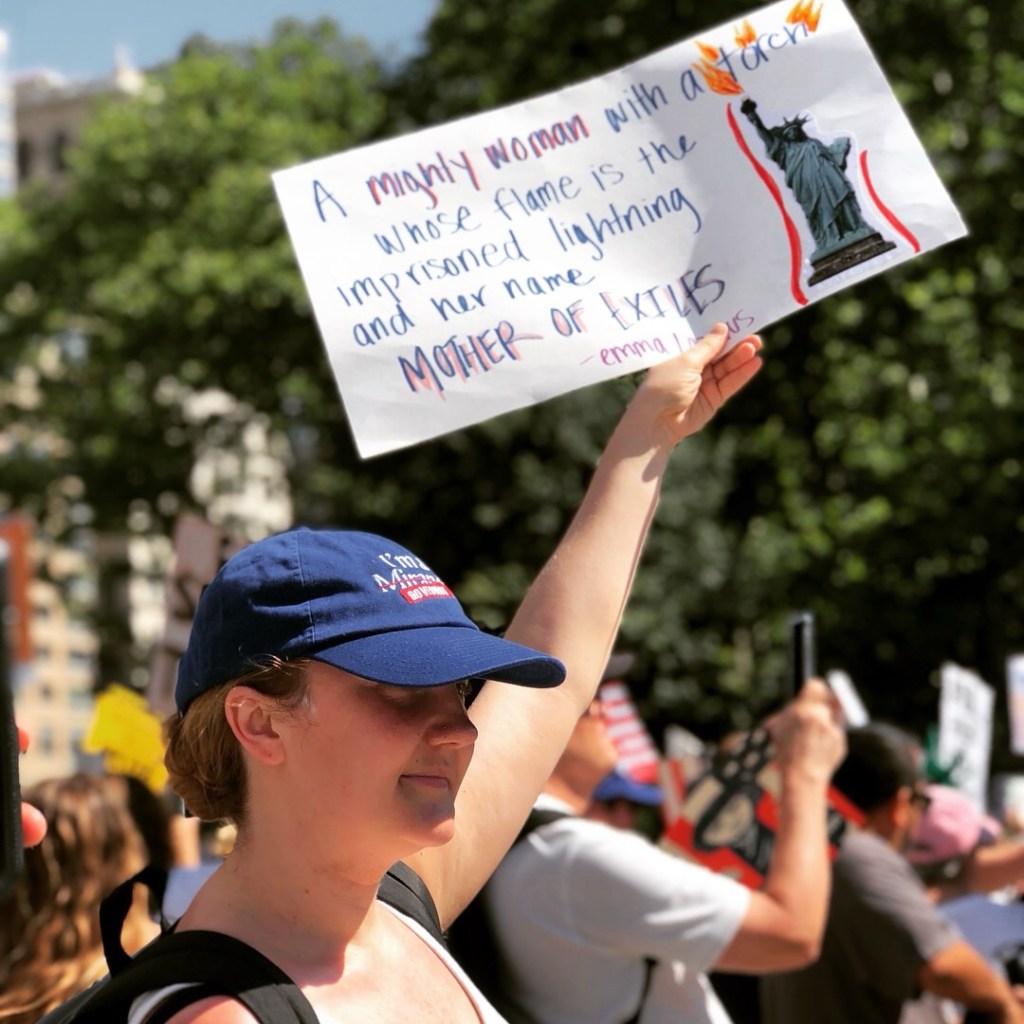
It’s timely that it was stuck in my head upon waking today because my profile subject this week believes in futures, too. And just like the song says, she believes, and I am keen to agree with her, that her voice and our collective voices can mean something.
But before I continue with futures, I have to dip briefly into the past.
A moment from my early childhood that still vividly plays in my memory is of a bright late summer day when I was almost five years old, one week before I started kindergarten. I was playing at the playground in our townhouse community preparing to embark down a tall slide, when a bouncy blonde girl I had never seen before bounded up the jungle gym steps and greeted me.
“Hi, I’m Sara! What’s your name?”
“Cathryn,” I responded.
“Cool! I live over there,” she said, pointing to a townhouse on the other side of where we lived. I told her where our house was and she asked me if I was going to Polk Elementary the following week. When I said yes, she asked me if I was in Miss Baumgarten’s class. No, I wasn’t, I told her, and said that I thought her teacher had a funny name. She didn’t seem to care. She careened down the slide and into my life for, well…forever, I guess.
This was my introduction to Sara Danver. Pretty much from that moment forward, Sara remained one of my closest friends throughout childhood, adolescence, and young adulthood. Even at age five, Sara had a lust for life that was palpable. An energetic, highly intelligent, and outgoing kid, she grew into a creative, independent, and empathetic woman who was at my side through most of life’s ups and downs for many years. No matter how the seasons shifted, I could always count on Sara to be there. Though life has gotten lifey in the last decade or so, and the geographical distance between us and the different courses our adult lives have taken have made our friendship less consistent, she is still someone who has, and always will have, a very special place in my heart.
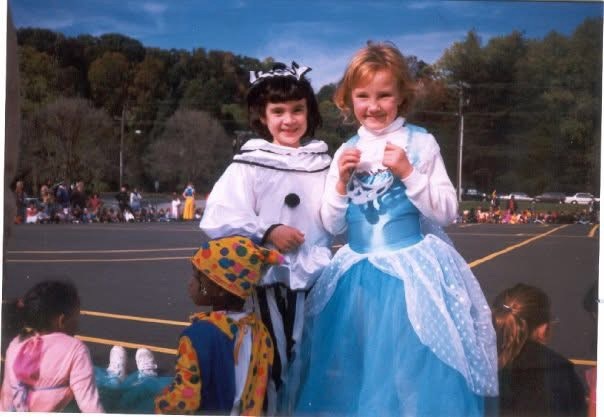
I spent many days, nights, and weekends at the Danver house during my youth. Her parents, Bruce and Patty, felt like second parents to me, and they stepped up to help my working single mom out on various occasions after my parents’ divorce in 2001. Their home and family was a comfort and haven to me in both happy and trying times.
There are so many things that I remember from our childhood and from time spent with their family, but there are two relevant memories that merit sharing. The first is that the Danver house was my first real introduction to National Public Radio. They always seemed to have it playing on their kitchen stereo. I would sit at their breakfast counter eating what Patty put in front of me, listening to the news, talking heads, jazz selections, or whatever happened to be on our local NPR station at the time. My parents watched the news and we listened to a wide array of music stations, but this was one that we didn’t usually have playing at home. I remember finding it fascinating—the variety of selections this single station had—and it became a familiar soundtrack to days spent at their house.
Another thing I remember from bumming around the Danver’s abode is watching The West Wing. This was something that my parents watched and I would occasionally watch it with them so I was already familiar with it, but I think my indelible love for this truly brilliant Aaron Sorkin show began when I started watching it with Sara. I didn’t understand all the political ins-and-outs at ages 10-13 when it was new, but I liked the characters, and I liked the way they talked. They were smart and funny and very real. Having grown up in the Washington, D.C. area, the world that The West Wing portrayed was at once familiar to me and foreign—it felt like peeking behind a closed curtain I had spent my life sitting in front of, and when I watched it with Sara, I was starting to get a fuller view of what actually went on behind that curtain. I remember she was actually knowledgeable of a lot of the political actions and terms used on the show and, when I would ask her what appropriations meant or why Congress was doing a certain thing or if that’s really what the White House press corps looked like, she would have answers. Not because she was smarter than I was (though she probably was) but because she was already deeply interested in these things and, I imagine, when she had these questions, she asked her parents and they explained all the nitty-gritty to her. I’m sure my own parents could have explained the same concepts but I never really thought to ask until I saw the light behind Sara’s preteen eyes while watching Josh Lyman lobby Congress about capital ways and means. I could tell she was getting something different out of this piece of entertainment than I was, and I wanted in.
When we talked recently, Sara shared with me that politics has always been a big part of her life and that her parents would take her to demonstrations and political events when she was “knee high to a grasshopper.” Though I hadn’t known that, it didn’t surprise me. Piecing together the memories I shared above, it makes total sense. The Danver family was always tuned into the greater world around them, and it’s only natural that they involved their daughters in their activism.
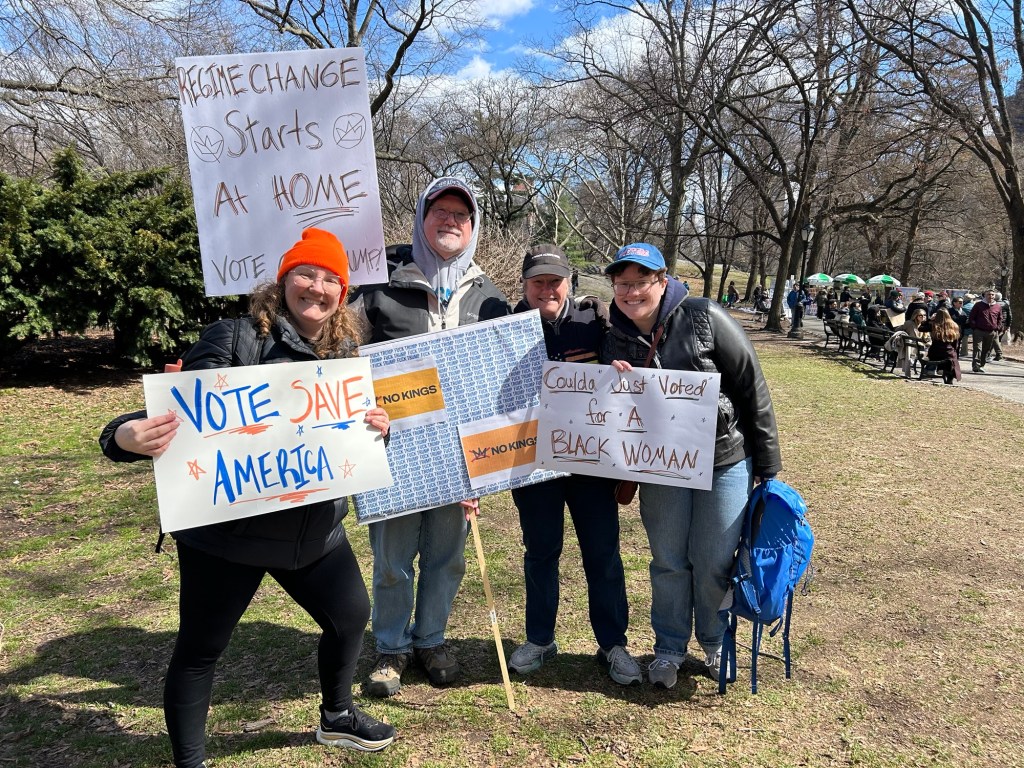
Fast forward to now, and Sara has fully immersed herself in the world of political and social action.
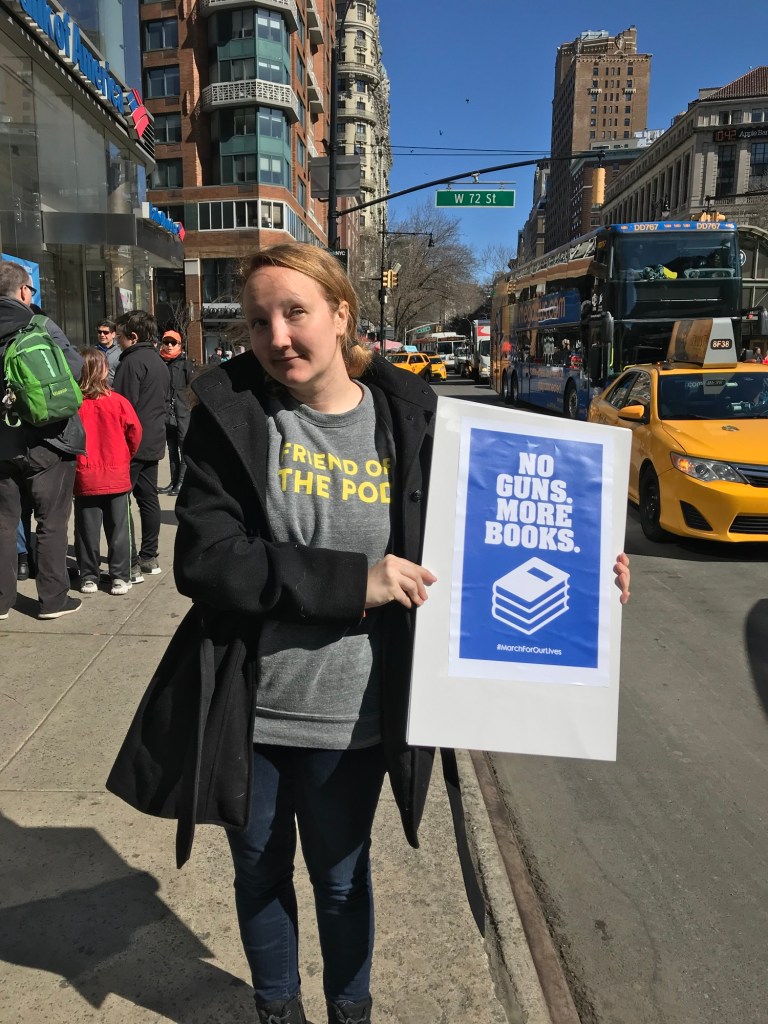
Sara works as a national account manager at Penguin Random House in New York City, devoting her career to her other great love: books. Though her day job finds her caught between the pages, her extracurricular life finds her very much ensnared in the world of political activism.
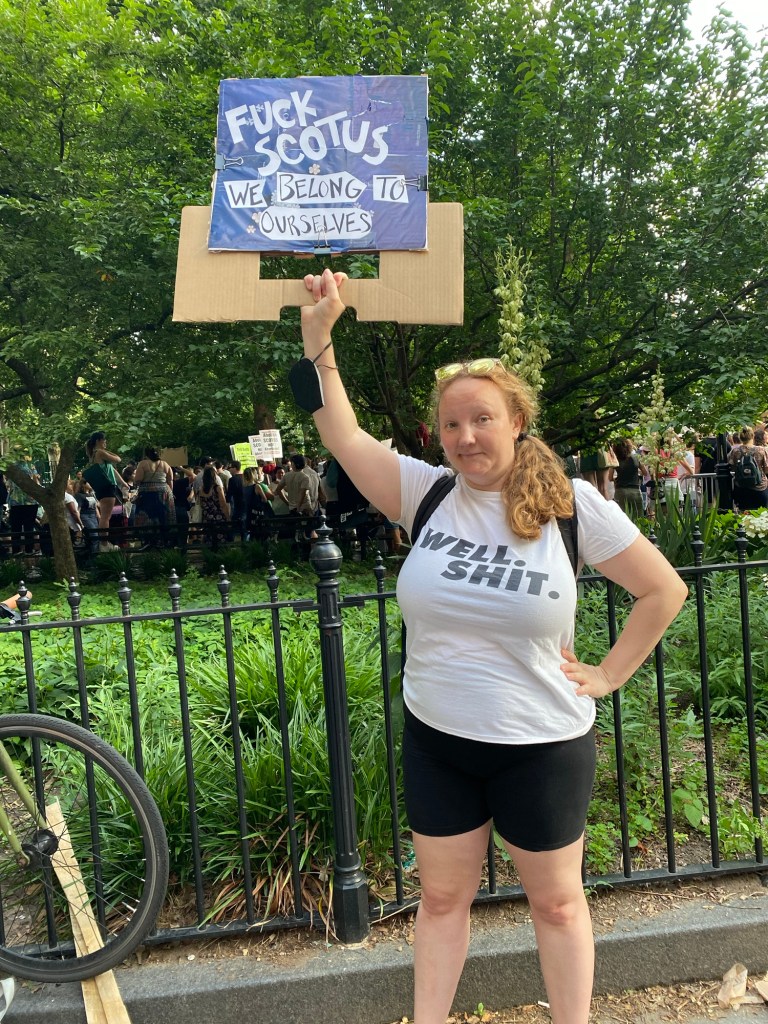
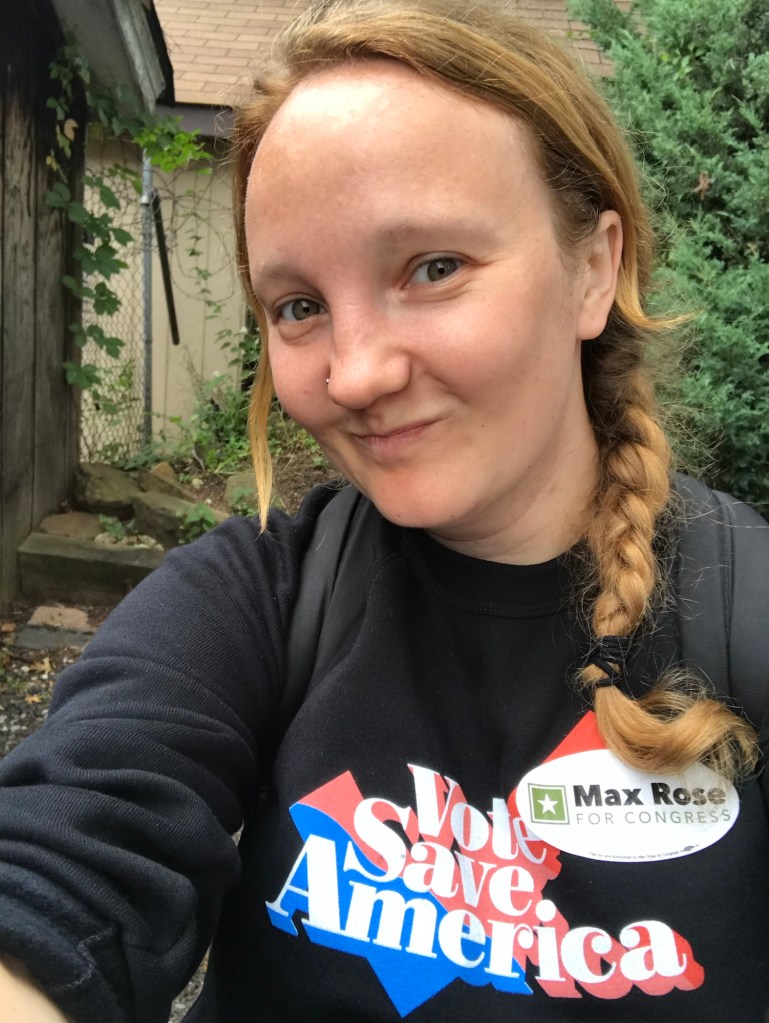
When she moved to New York in March 2016, Sara began embedding herself in the local politics scene. After the shocking election of Donald Trump that November, she started canvassing in a Staten Island swing district and knocking on doors. Later, she joined an Indivisible group in Brooklyn and began volunteering with the organization Vote Save America. Both of these organizations are nation-wide movements working to gather ordinary people to demand action in their communities and work towards a more functioning democracy. The Indivisible group that Sara joined in Brooklyn was one of the first in the nation.
“It’s a great organization that really empowers you to connect you with your local politics options,” Sara reflected. “It helps its members learn how to do some of the important every-day work on the ground: how to get meetings with your members of congress, what to do with petitions, how to organize phone trees, etc.”
Indivisible also produces a lengthy document called “Indivisible: A Practical Guide to Democracy on the Brink” which, according to their website, is a “set of strategies and practical first steps to help you get started” for anyone who “lives in America and is upset, scared, and determined [and wants] to do your part to protect your family, your neighbors, and democracy from Trump 2.0.”
Groups like Indivisible and Vote Save America that provide mediums for collaborative social engagement are so important, especially now. As Sara said, “It’s all about collective action—the issues we face can become a collective action problem, or we can work to create collective action success. Nothing we do individually in a vacuum is going to matter that much, but millions of people going to protests or making phone calls can make a difference.”
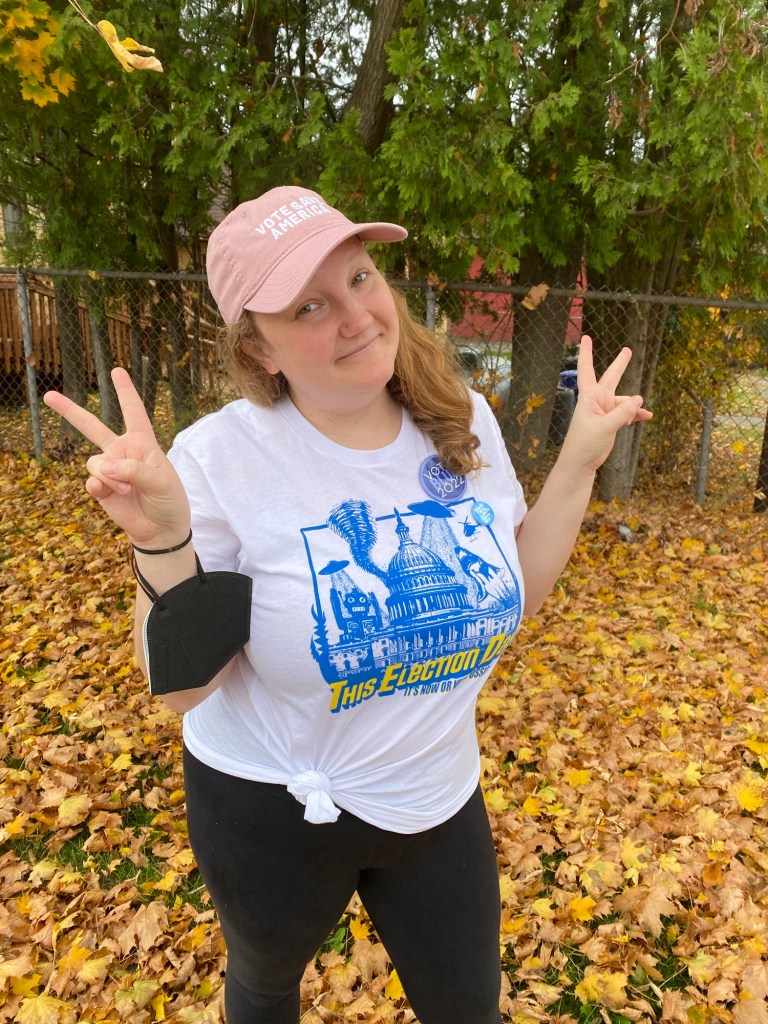
In addition to joining the cause with Indivisible and Vote Save America, Sara embarked on a political writing project with some like-minded friends shortly after the 2016 election. Though the project petered out after a little while, Sara’s drive to use her voice, knowledge, and fervor for real political change never faltered.
Which brings us to “How to Save Democracy and Other Stories,” Sara’s weekly substack that she has been publishing for the last three years.
“In early 2020, I started sending out these mass emails to everybody I had an address for,” Sara recalled. “They outlined ideas for things people could do to help with the upcoming election. I also made a giant how-to guide called ‘So You Want to Save Democracy’ that I included in my emails. It enumerated different ways that people could jump in and take decisive action. The guide got passed around within a lot of my local circles which ultimately helped me develop my Substack platform. I began subscribing to similar substacks and eventually just decided to take what I had been doing via email and turn it into a blog.”
Sara began her subscriber base with her abundant email contacts, starting with about 200 subscribers. Now, she has just over 1200.
As one of Sara’s dedicated followers, I can attest to the impact that her weekly messages have. One thing I love about “How to Save Democracy…” is that it’s a perfect blend of Sara’s unique voice and practical, actionable steps that people who may be politically minded but not sure where to start can take.
“Writing is how I process the world,” Sara reflected. “It’s how I understand myself. I don’t usually know what I think about something until I start writing about it. I’ve been trying to figure out a way to write publicly for a long time and it seemed like this was the perfect time for it.”
Each week, Sara hones in on different issues within the current political arena: the war in Iran, trans rights, gun violence, immigration, ICE raids, abortion, you name it. She also muses on other topics like the Heated Rivalry book series, American Girl dolls, reading, sports, and anything else on her mind. She has a talent for always tying whatever she is talking about back into the bigger issues and coming full circle to what it all means to our democratic society in the here and now. Another thing she does without fail is provide a list of “how to help democracy this week” that outlines specific steps her readers can take to get involved. For someone like me, with a heart and mind very much in the game but often not knowing what I can do to make realistic change in a world with so many problems, these handy tips are key. And it’s all coming from someone whose voice and vision I trust and who I know is elbow-deep in the causes I believe in.
So, what are some of the ways to save democracy that she highlights for her readers? When I asked her what she thought were the most important things any average person could do to get involved and make change, she said, “Subscribe to my substack!” Laughing, she followed that up with this: “Call your senators and representatives every week, even if they’re on your side—call and thank them, encourage them to bully their coworkers more. If there is one thing you want to do every single week that can make an impact, do that. Another great way to get and stay engaged is to pick one organization that you believe in, subscribe to their emails, follow them on socials, and do what they tell you. Decide to do one thing a week that they tell you to do. For me, that is Vote Save America: I log in and whatever is going on there is what I’m participating in.”
Sara said you can tackle this approach of finding a group you trust and following their direction from a lot of different angles. There are electoral groups such as Indivisible and Swing Left; programs like Run For Something that encourage young people to run for open city and state offices; or even cause organizations that support issues you care deeply about, such as trans rights or the climate. Getting integrated into one of these groups and then taking the direction they give can simplify the process for a lot of people.
“Figure out a level at which you can pay attention, and pay attention at that level consistently,” Sara urged. “That’s way more important than what specific action you’re taking. What this looks like for me right now: I’ve selected two or three key newsletters that I read every morning in digest form, and then I don’t listen to the news for the rest of the day. I’ve chosen an organization that I respect and trust to follow, and I do what they tell me to do and focus on the things they tell me to focus on. I think if we all participated at this level consistently we would be more prepared when something disruptive occurs and wouldn’t need as much of a huge surge of action to combat it.”
I asked Sara what she thought of all the people out there, on both sides, walking around with so much misinformation or partial information. We see it all the time now—people jump on the bandwagon of a headline they read or a Tweet they saw and double down, often refusing to listen to other people’s opinions and frequently lambasting anyone who thinks differently than they do, even if they themselves don’t have all the facts. It can be hard to confront and engage with this type of person, and yet there are times when it can’t be avoided.
“We are all presented with the same options,” Sara said. “We can put our heads in the sand, make decisions without all the information, get shit for it, and deal with the consequences; or we can be informed, make a decision that we can stand by, and then stand by it. I think many people are too quick to choose option one, and that’s how we ended up here.”
Sara admitted that though she sees the rampant spread of misinformation happening today, she is pretty insulated within her side of the political community, and that most of her followers on Substack are not people who she has to convince to agree with her. “That’s not my bag,” she said. “There are a lot of amazing writers out there who do that so well, but my goal has never really been to change people’s minds; my goal has been to give people who are on our side the tools that they need to make change.”
That being said, Sara did have some solid advice for engaging with people on the other side of the aisle. “What’s been the most useful for me has been a type of ambient interaction,” she reflected. “I am very active on social media and sometimes just exposing friends or family members who don’t agree with me to my point of view can be helpful. It can remind them that people on the left aren’t just crazy others; it can show them that someone out there is saying something else. Democracy is a team sport—maybe they’re not going to listen to you directly but you may possibly be softening the ground for someone else in their life to broach the subject. Staying in people’s lives who have radically different opinions sometimes means just leaving the door open to discuss those things. You have to figure out what your own line is.”
She also offered, “We all know how to talk to people, we do it every day. If you’re ever in a setting where you have the emotional wherewithal, I think it’s important to have tough conversations. Ask questions: ‘where did you hear that from?’ Make observations: ‘Oh, that’s interesting because that’s not really my experience, let me tell you my thoughts on this issue,’ etc. It’s important to try to do it in a way that doesn’t get our dander up. If you’re in a place where you can take a deep breath, truly listen, and calmly have a reasoned conversation, that’s great. But boundaries can be really useful in these scenarios too. It’s vital to be able to say that you’re not in the place to talk about these issues right now but suggesting that if given a little more warning, you’d be open to sitting down and having the conversation on better terms.”
Sara and I talked about the timeliness of her blog: in the divisive and agitated political climate that we live in, the fodder for political commentary and the urgent call for democracy-saving action is ripe. I wondered out loud whether it was a challenge to provide a consistent message of hope and a call to action and whether, if the political tides ever turn in our favor again, she would still find material to write about.
“It’s gotten a lot harder this time around,” Sara commented. “In every measure, things are worse. I honestly don’t think I’m always doing the ‘hopeful’ thing very well—I despair a lot, I’m angry, I want to not pay attention. But I’m writing the blog as much for me as for anyone else. I am trying to say the things that I need to hear. I try to remind myself, and my readers, that there is no such thing as fucked or not fucked; that we do not live in a binary. There’s a quote from writer Rebecca Solnit that I love: ‘The fact that we cannot save everything does not mean we cannot save anything, and everything we can save is worth saving.’ It can be depressing to think that there’s no end in sight and that we will have to keep fighting for the rest our lives, but the whole point of democracy is that it takes all of what we give it—it takes your despair, it takes your anger, and it feasts upon whatever it’s fed, so we have to try to feed it something positive and useful.”
Sara assured me that she would continue her project, even after the Trump era ends. There is always something to work towards, even if the stakes don’t seem as drastic. “It was definitely easier in the Biden era when I first launched,” Sara said. “Even when I was writing about depressing topics, there was always something good I could talk about too. The crises and problems I wrote about seemed more isolated. Another thing I miss is being able to delve more into things that weren’t as pressing. I specifically named it ‘How to Save Democracy and Other Stories’ because I wanted the opportunity to explore other content. There’s a lot less room for that now when the bad news is all-consuming. But they want it to be all-consuming. Fascism wants you to be so put down that you can’t think of anything else: you’re not making art, you’re not asking questions, you’re just mired in confusion and disruption. A goal of mine for this year has been to figure out how to continue to write about more than just the politics again, working in my other interests and weaving it all into the bigger-picture narrative.”
I, for one, am eager to see what Sara continues to explore on her substack and the different avenues upon which she invites her readers to travel along with her. For now, I will leave you with her own words from a post she wrote the night before the November 5th, 2024, election. In a post titled “No Matter What Happens, What We Did Here Matters,” Sara wrote:
“But here’s what I do know: no matter what happens, what we did matters. It matters that we’ve spent the past few months talking to each other about the kind of country we want to live in. It matters that we’ve been talking about how politics influences our lives, how we can use politics to make each other’s lives better. Connecting with each other, reminding each other that we live in the same country, that this democracy belongs to all of us and that we all have a say – it really, really matters. Because whether we win or lose, we’re going to need that connection, that belief in our own power and what we can do together, and the knowledge that the future is ours to build.”
Then and now, even with so many unanswered questions lingering and so many battles left to fight, Sara’s voice is resonant with hope and a surety that we will work towards a just tomorrow. We will do it side by side for however long it takes, as long as we continue to believe in futures that we alone can forge.
To read Sara’s work on Substack, please visit (and subscribe) at https://saradanver.substack.com/
To learn more about Indivisible, please visit https://indivisible.org/
To learn more about Vote Save America, please visit https://votesaveamerica.com/
 The People Project
Leave a comment