“You’re basically the grief whisperer,” I told my friend Laura on a recent phone call.
She chuckled. “I like that.”
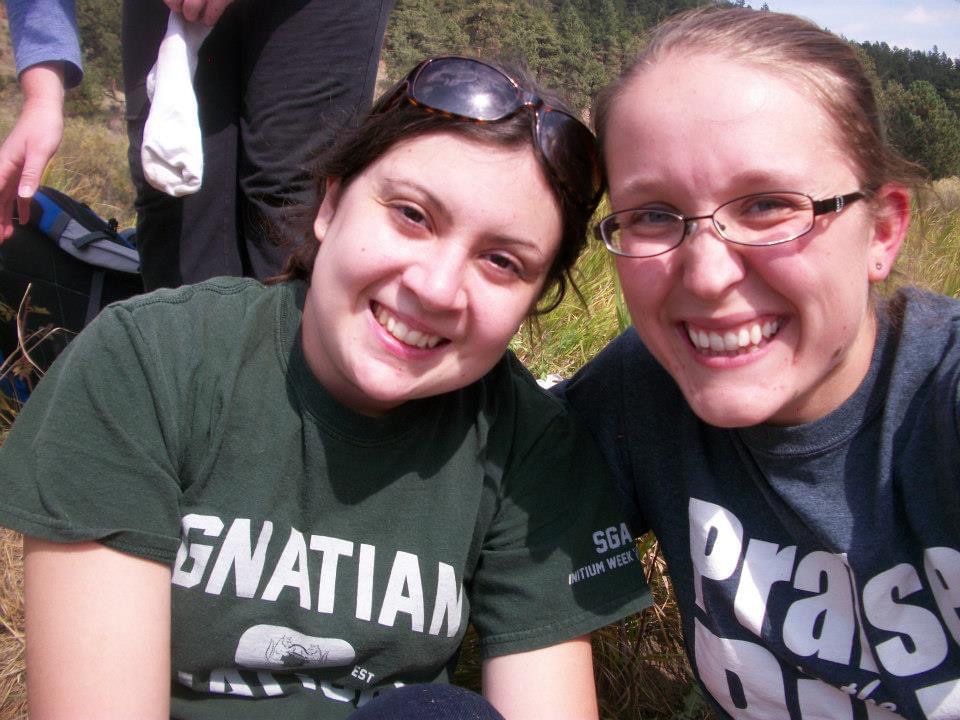
Laura Shrode and I have known each other for almost fourteen years; we were both participants in the Colorado Vincentian Volunteer (CVV) program in Denver, Colorado, from 2012 to 2013.
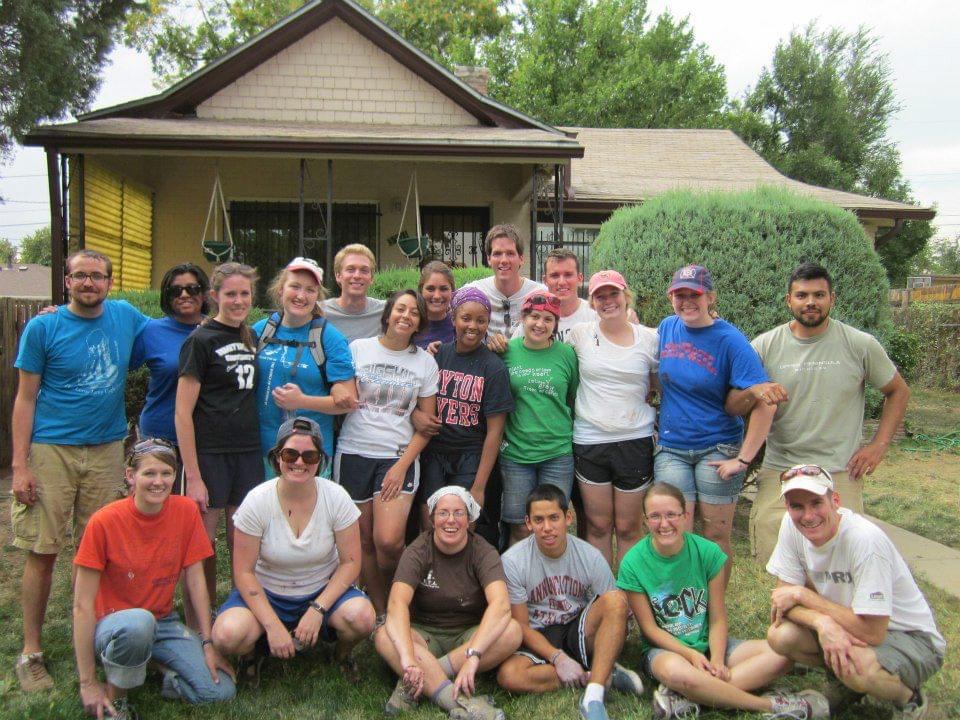
CVV is a Catholic service program for young people ages 22 to 30 who spend one year living together in intentional communities, serving as full-time volunteers at organizations around the city. There were 18 volunteers our year—nine of us in one house and the other nine in a house three blocks up Pearl Street. Whether or not volunteers were direct housemates, we all spent a lot of time together—attending weekly discussions and masses, volunteering at events, attending retreats and immersion trips, and bumming around the Mile High City. The CVV motto is “companions on the journey,” and that’s what we were—we accompanied one another through challenging and eye-opening service experiences, learned about important social justice issues and how we related to them, and experienced the joys and adventures of young adulthood together. Many of us are still in touch and maintain rich friendships to this day.
Since CVV, I have been in awe of Laura. She exudes a compassionate interest in others and a gentle patience that few others equal. Her deep spiritual understanding allows her to see the world through a lens guided by faith and hope. Laura did her undergraduate degree at The College of St. Benedict in St. Joseph, MN, and she was who taught me the Benedictine phrase “listen with the ears of your heart,” which is a sentiment that has clearly influenced her. Listening with her heart is a method she appears to employ with ease. She is also terribly goofy and pretty much anytime you want to hang out with her, she will insist on getting ice cream. (I mean—pull my leg.)
And, Laura has a relationship with grief and loss that has always interested me. Her understanding of grief is complex and in-depth: a former hospital chaplain who now works for an organ donation organization, she has made grief her vocation. Part of this is due to personal experience.
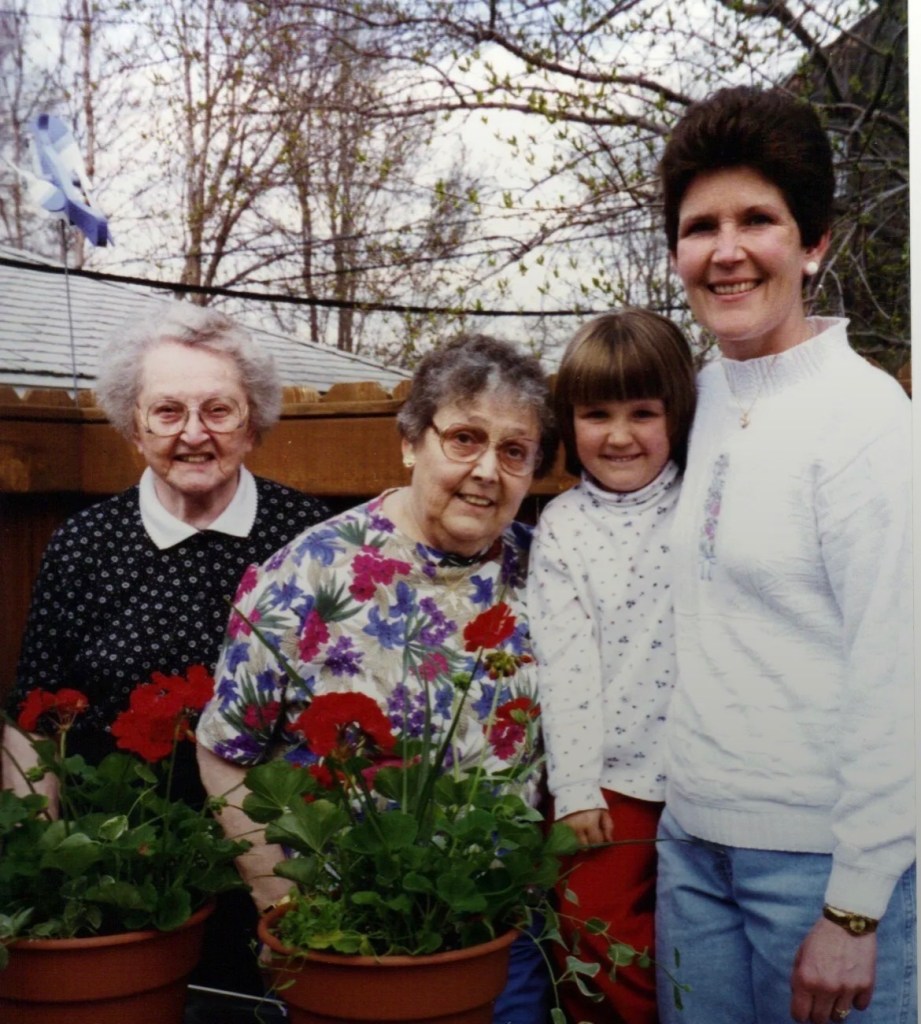
When Laura was eight, her mother passed away after a two year battle with breast cancer. “The only daughter of an only daughter of an only daughter,” Laura also had special relationships with her grandmother and great-grandmother. All three women died before Laura was in high school.
“I have known grief for a very long time,” Laura reflected.
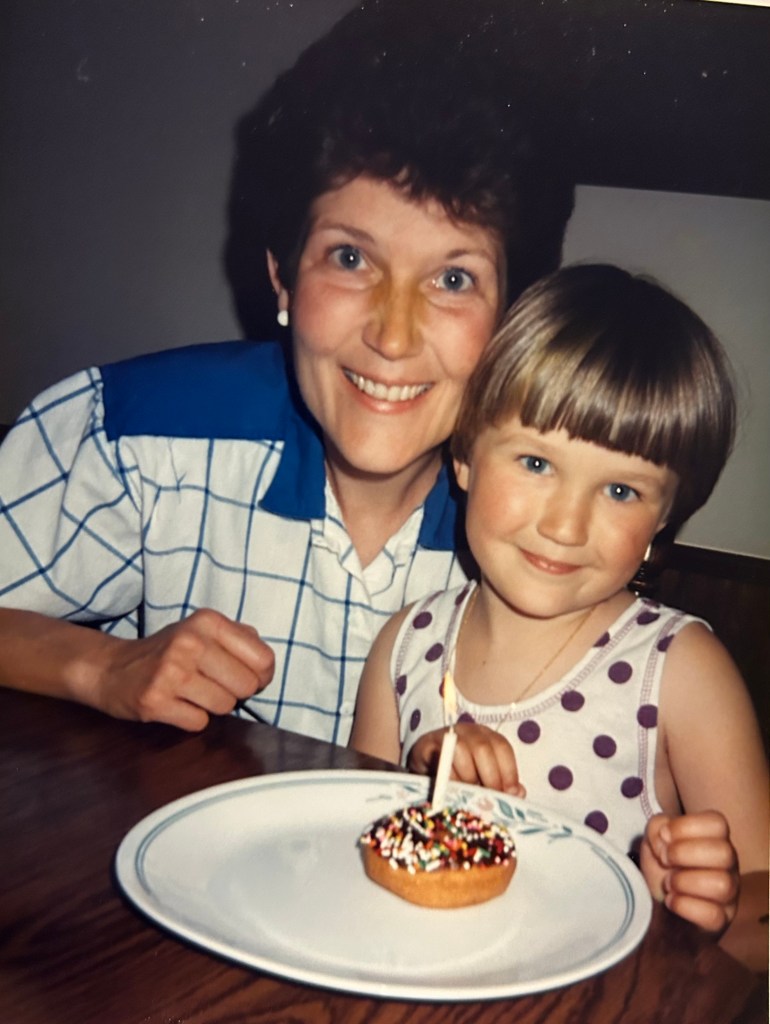
Laura knew at a young age that she wanted to work in a hospital. Her mother was an X-Ray technician at North Memorial Hospital in Robbinsdale, MN, and she warmly remembers visiting her at work. She also remembers going to see her mom while she was undergoing cancer treatments but recalls even these more darkly tinted memories with fondness and a feeling that the hospital was a safe and peaceful place. Laura shared with me that during our time in CVV, she would frequently seek refuge to reflect and unwind in the chapel of a hospital near us in downtown Denver.
With a major in biology and psychology at St. Benedict, Laura’s original plan was to become a doctor. After a dust-up with a chemistry class, she discovered the need to re-route her med school plans and work toward other goals.
“When I first decided not to pursue pre-med, I was devastated,” Laura recalled. “I thought that to work in a hospital you had to be a doctor. I now knew the medical profession wasn’t for me but all I had ever wanted to do was work in a hospital.”
During her time in CVV, Laura discovered hospital chaplaincy. She found that this profession that focused on ministering to patients and their families—talking, praying, and offering counsel in a time of need—was a much better fit for her. She pursued her Masters of Divinity and began working as a chaplain at St. Cloud Hospital in 2014.
Laura worked on staff as hospital chaplain for six years, companioning people in different stages of illness and grief. Some of the most profound experiences Laura remembers involved interacting with children who were grieving or ill.
“I think because I was a child when I lost my mother and my grief wasn’t always directly addressed, I was drawn to the children in those rooms,” Laura noted. “It was important to me to make sure they were not ignored in what could be sad and confusing situations.”
One beautiful memory of her chaplaincy time that Laura shared was a moment when she was called to visit a preteen girl in the mental health ward who had been admitted for suicidal ideation and attempts. Laura recounted that the girl, who was sitting on the floor of the visiting room with a precious toy of hers, at first seemed reluctant to talk to a stranger and didn’t engage. “I don’t know why I did this,” Laura remembered. “I had never done this before but something in my body just told me ‘sit down.’ So, I got on the floor next to her and we sat in silence for what seemed like a long time. After a while, she began showing me her toy and then, she opened up and started talking about everything. She asked to hold my hand and told me that no one had just sat with her before. I’ll never forget that.”
Despite loving her role as a hospital chaplain, Laura wanted something with an easier commute, closer to where her friends and family lived. In 2020, she accepted a role as a family support coordinator at LifeSource, a Minneapolis based organ donation agency that serves the states of Minnesota, North and South Dakota, and parts of Wisconsin. In this role, Laura would be using a lot of the same skills she had as a chaplain—working with families during times of grief, and helping guide them in the organ donation process. “In chaplaincy, I worked with patients in end-of-life care and death is often seen as the end,” Laura said. “Whether or not our theological beliefs contradict that, in many ways—especially to grieving families—death is the end. Whereas with organ donation, it’s not. Patients can give the gift of life to others and their legacy can live on through them and through the people that the recipients’ lives touch. This really appealed to me; the job felt like the perfect mix of everything I’m passionate about.”
The LifeSource position also suited Laura because of her love of medicine and science. She liked the idea of being able to provide medical information to patients’ families and was interested in the role that family support coordinators played behind-the-scenes: they were actually able to be present in the operating room during the organ recovery process, which Laura, a self-proclaimed “anatomy nerd,” loved.
Laura had no idea when she started at LifeSource how her new career path would intersect with her life. In March 2022, one of our CVV community members, and Laura’s best friend, became an organ donor upon his death.
Kevin and Laura lived in the same house at CVV and quickly became best friends. They were platonic soulmates, as Laura puts it, and understood each other in a way that few friends do. Laura recalled, “I met Kevin on my first day in Denver. I had been one of the first people to arrive and was sitting on the balcony journaling. He came out and introduced himself and we talked for a while. Afterwards I journaled, ‘I think I just met one of my best friends.’”
Laura reflected on their relationship: “We both felt so at ease around each other; we didn’t have to be doing anything, we didn’t have to be talking or we could be, but it was just effortless. He never drained me—I could be around him and have my emotional battery refilled because we were just so comfortable and familiar with one another. We had gone on so many walks, listened to so much music. Pretty early on we learned we could have really deep, reflective conversations and hold space for each other about hard things. He is one of the first people who I really talked to about my mother’s death and other traumas in my life.”
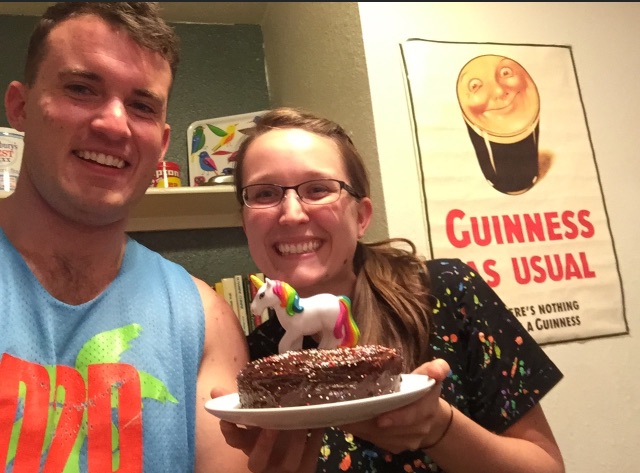
Though I cannot claim the kind of relationship Laura had with him, I was lucky enough to also call Kevin my friend. I loved him immensely. He was one of a kind—he had a quick, biting sense of humor that could lighten any mood; he had a deep sense of empathy and an ability to listen in a way that really made you feel seen; he had a beautiful singing voice that he shared often; he loved music of all kinds, especially on vinyl; and he gave hugs that made the world melt away. Some of my favorite memories of him are times when he and I took a walk or just sat and really talked. He had the ability to hear through what I was saying and get to the heart of things. Sometimes what he reflected back to me I didn’t want to hear—but it was always true and never unkind. He was the type of friend who challenged the people he loved to be better versions of themselves simply because he loved them so much.
One of the scenes that I come back to whenever I think about him occurred in May of our CVV year. It was a beautiful Saturday morning and one of my housemates and I decided to walk down to the other house to see if anyone wanted to hang out. When we got there, Kevin and another housemate were in the courtyard, standing in the little alley that connected the two buildings of this house by a fire escape. Both young men were barefoot, wearing only shorts and tank tops, and they were throwing kitchen knives at the brick wall of the house. They greeted us with total nonchalance and continued their bizarre activity as we started chatting. I was flabbergasted and totally amused and also concerned that neither of them was wearing shoes. After a few minutes, they paused their knife wielding and Kevin and I sat down against one of the walls while our two friends attempted to leap for and climb the fire escape. My grandfather had died a few days earlier and Kevin immediately wanted to know how I was doing and what was going on in my heart and mind. He went from hurling cutlery with gusto to assuming a posture of instantaneous calm and sincerity, directing his whole attention toward a grieving friend. I had been happy to distract myself by watching my friends be silly jackasses in the warm, blue-skied Colorado day, but he knew I was hurting and it was his nature to attend to that. I love that memory so much because it encompasses the kind of person he was—an adventurous, weird, goofy kid with a heart of pure gold.
Kevin Patrick McGrellis was one of the best people all of us knew and for some reason that is beyond my meager understanding, he died.
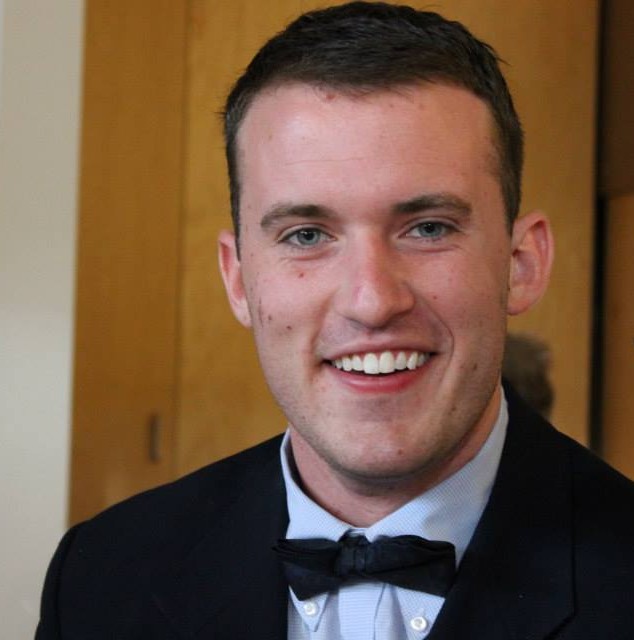
On the evening of Friday March 11, 2022, Kevin was watching TV at home when he suddenly collapsed. Cardiac arrest brought on a seizure and though his partner performed CPR until the ambulance arrived, Kevin never regained consciousness. He was 31.
He was kept alive on ventilators for a little more than a week. On March 20, he was taken to an OR in Denver Health Hospital, the ventilators were removed, and he died. His heart and both kidneys were donated. He saved three lives that day and still, it seems an unfair price for not having him in the world any longer.
Laura flew to Denver the day after Kevin was admitted to the hospital and stayed with him the entire time. In addition to simply being present with Kevin and his friends and family, Laura found herself stepping to some of the same motions she would go through as a chaplain or at LifeSource. “It was a little bit of a blur,” Laura remembered. “It was such a weird mix because everything felt so familiar. I have walked through these steps, been in ORs, and led families through this process many times and yet, it was so heavy because it was someone that I loved.”
Despite the desire to have hope that her friend would make it through this, Laura’s professional experience guided her expectations from the start. “Based on what I was hearing and seeing, I knew from the first or second day that Kevin wasn’t going to recover,” Laura said. “Obviously I wanted to be wrong—I wanted him to survive. But from everything I had learned in my role at LifeSource, I just knew in my gut that his recovery was unlikely. His family and friends didn’t have the same kind of knowledge as I did though, and I didn’t want to be the pessimist in the group. I also didn’t want to have to be the one to tell them how serious it looked. So, for a while, I just allowed us all to hold onto some hope. It was weird to be the only one to have this sense of knowing the likely path we were on—this feeling that I understood what was truly happening but no one else did.”
After several days of tests and waiting, it became evident to Kevin’s health team and loved ones that he was not going to regain sufficient brain function to survive without the ventilators. His family knew that he would not want to live this way, so they made the decision to move to end-of-life care.
Kevin had indicated on his driver’s license that he wanted to be an organ donor. And Laura knew from personal experience that this is what Kevin wanted if the situation ever arrived. “During my orientation for LifeSource, we were told to practice having conversations about organ donation with our friends and family members just so we could get more comfortable talking about the process and figure out what kinds of questions we might be fielding,” Laura remarked. “I practiced with Kevin so he knew a lot about it. We had multiple conversations discussing the process and had talked about how we both wanted to be organ donors. We both felt that if we’re going to die, we’re not going to need our organs going forward so why not help someone else? In those conversations, he was very open to the idea of organ donation and always willing to talk and practice with me, but he didn’t really like thinking about death because it was something he shared he was afraid of. I didn’t see him afraid of much, honestly, but dying was something he deeply feared.”
Laura and I shared a pregnant pause at this point in our conversation. Then Laura finished, “Fast forward a couple years and well…you know.”
As Laura explained to me, when organ donation is a factor, the decision needs to be made relatively quickly—it takes a few days to determine if the patient is a suitable candidate, run the appropriate tests, and secure recipients. There is a delicate window where organ donation coordinators seek the opportunity to explore donation with families. “A lot of families decline donation simply because of the time it takes to set up the process,” Laura told me. “Deciding to remove the breathing tubes and move to comfort care is such a heavy decision that sometimes once the family has determined that, they don’t want to spend more time waiting. In my field, best practice is for LifeSource, or the local organ donation organization, to bring it up because those teams are trained on how to do this compassionately with detailed and accurate information on what is a very sensitive topic. We typically don’t like for the health team to bring up donation—we want to be the ones to mediate that process with the grieving family.”
In Kevin’s situation though, Laura knew she had to intervene. It seemed like time was beginning to run out. So, when Kevin’s family began discussing moving to end-of-life care, Laura took the opportunity to step in and share her professional knowledge. “When Kevin’s mom made a comment about moving to comfort care, I was the one to mention organ donation,” Laura recalled. “I was really nervous to bring it up but I also knew the process takes time and if we waited until the official decision of withdrawing care was made, it would be too late. I didn’t want to overstep but I knew I had to act and ask for forgiveness later. I do think it was helpful: if we had waited we might have missed that opportunity and I know Kevin wouldn’t have wanted that.”
Laura told me that bringing up organ donation often shifts the tone with families. “It makes it more real,” she commented, “Even though you know we’re likely going to remove the breathing tube which means he’s going to die, organ donation really means he’s going to die.” Regardless, she and Kevin’s family knew that he would want to be the gift of life to others so they moved forward with the process.
Kevin was able to donate three organs—both his kidneys and his heart. Despite Kevin’s death being initiated by cardiac arrest, his heart was healthy enough to donate. The primary factor in Kevin’s passing was the loss of brain function: when someone experiences cardiac arrest, there is an immediate cessation of oxygen flow to the brain. Permanent damage can be done almost immediately, even if CPR is performed. Unfortunately, though our bodies are remarkable at repairing themselves and the magic of modern medicine has only aided their ability to do so, brain tissue is one thing that cannot be recovered once it has been damaged.
Still, knowing that Kevin’s ultimate passing was brought on in part by a heart attack, it’s an emotionally confusing fact that his heart was one of the organs healthy enough to be transplanted. Laura shared with me that the heart recipient, with whom she has been in touch the last few years, mentioned that her transplant surgeon said it was “one of the healthiest hearts” he had ever seen. When Laura first relayed this, I felt distressed. I thought, if it was healthy enough for someone else, why couldn’t it be healthy enough for him?
When I shared these thoughts with Laura, she told me that this line of thinking is not uncommon in her work. “Donation is so rare—less than 1% of patients die in a way that is suitable for organ donation—and I was proud that Kevin was able to be a donor,” Laura said. “If he was going to die, being able to save others through his death is so beautiful and at the same time, it’s natural to wonder why if his organs were good enough for others, they weren’t good enough for him? The truth is that they were good enough but his brain wasn’t. It is a weird feeling though, and I think that’s something a lot of donors’ families struggle with. We tell families that their loved one could be the miracle for someone else and sometimes it’s like ‘well, where was our miracle?’ This is normal, I think. In times of despair, we turn inward and want to support our own kin. More often though, I am amazed by the generosity of people in the midst of their grief. The desire that people have to help others in the middle of some of the worst moments of their lives is incredibly moving. So many families are supportive and generous and more than anything, it’s clear that they don’t want other people to experience the grief that they are feeling.”
Even in her own heartbreak, Laura stepped up—using her background and professional experience to support in the special ways that only she could. “It felt very fitting that I could walk him and his family through this process,” reflected Laura. “I felt like I was supposed to be there and I was really grateful that I was able to support them in this unique way.”
In addition to “chaplaining” Kevin’s family and friends who were present in the hospital, Laura also provided comfort and information to his friends further away. During that entire week, we had a CVV text thread which included all but one of us—the one whom our conversations and concerns centered on—and Laura was the primary source of contact on the ground. She kept us informed throughout the ordeal: keeping us up-to-date on Kevin’s medical status and detailing the different stages of end-of-life care and the organ donation process; she communicated with us what the people with Kevin might need and how we could support them from afar; and in his final days, when the decisions had been made, she offered us the beautiful opportunity to call so we could say goodbye to our friend as she held the phone to his ear. Though I can only speak for myself, I think I can say with some confidence that this was one of the most heart-wrenching weeks of all of our lives and that we were all incredibly grateful that Laura was there with him, and there for us, too.
“I would go from a moment of describing the donation process and where we’re at: what the donation agency was probably doing at that time, what blood tests they were running, what sort of measures they were taking to look at his heart and his liver and everything else to see what organs may be viable for donation to then being in his ICU room and listening to music with him or watching his favorite episode of Friends together,” Laura remembered. “Once we made the decision to move to comfort care and go down the organ donation pathway, I asked if I could stay overnight, so I slept two nights on a pull-out couch with him in the ICU. There were many people who wanted to be with him and I was so grateful for all the love that was being shown in his final moments. But, I also wanted to spend every minute I could with him—just holding his hand and being with my best friend for as long as possible.”
Laura recounted a moment where she was at Kevin’s bedside one night, holding his hand and crying quietly. A nurse had noticed and had called the hospital chaplain to come check in with her. “It was so strange to be on the receiving end of things,” Laura observed.
One of the things that Laura mused on when we spoke was how she had expected this experience to feel easier. In both her personal and professional lives, she holds a familiarity with death and loss that few others can claim. She is, more or less, a professional grief handler. But she found that this was not the case. “Kevin’s death really shook me,” Laura said. “I know grief. I know what it feels like, I know how it hurts, I know how to deal with it—I know it personally, I know it professionally. I have a lot of head knowledge on how to help others walking through grief. I’ve walked my own grief path and have walked so many others through their grief. I have a lot of heart knowledge, too, with my mother’s death and other losses I have experienced. So when it was all happening, I thought ‘yes, Kevin’s death is going to hurt but I am a grief pro, this is going to be fine.’ It was not fine. It broke me. It was much more challenging than I anticipated it being and that frustrated me. I kept thinking, ‘you understand grief, why is this impacting you this way?’ but then I would chaplain myself and say ‘that’s not how it works, grief comes and goes in waves, grief is different for every person, it is what it is, just let it be’ but still, I kept coming back to the idea that I should be better at this.”
Laura continued, “I like walking with people through end-of-life moments and helping them navigate grief and loss. A lot of people tend to skitter away from talking about death or grief—it makes them uncomfortable. But those conversations are familiar to me. Not that I like grief but I relish being present with people in those moments, hearing their stories, and giving them the opportunity to delve deeply into their feelings during difficult times. I enjoy exploring grief with others. Given all of this, I thought handling my own grief would be easier and when it wasn’t, it really took me by surprise.”
In the darkest of morning hours, at 12 AM on Sunday March 20th, Laura, Kevin’s friends and family, and Denver Health staff lined the hallway for Kevin’s Honor Walk—the serene tribute that is paid to organ donors travelling to the OR to end their journey but continue someone else’s. For Kevin’s, the doctors and nurses lining the hall each laid a white paper heart on his bed as he passed by, signifying the tremendous gift of life he would be leaving behind.
About an hour later, Kevin passed—within the window of opportunity where his organs were still viable for donation—and it was over.
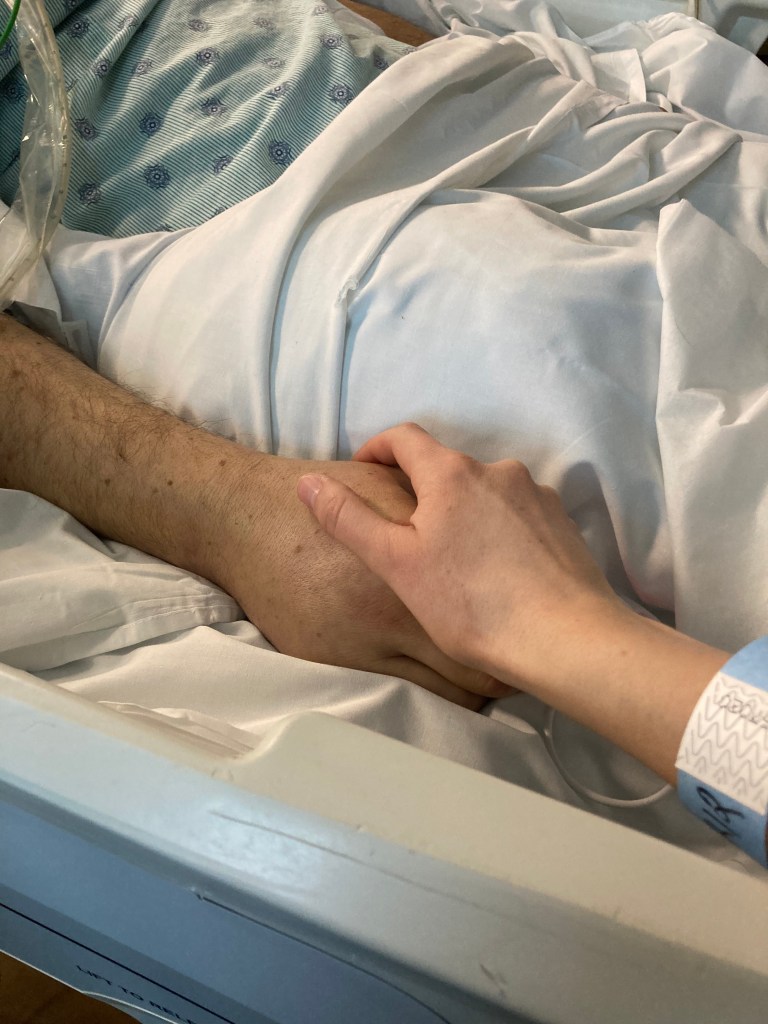
But grief is never really over, as Laura knows well. The weight of the absence we feel when someone close to us dies is measured by the love we have for them and the momentous part they played in our lives when we were lucky enough to walk beside them.
“On the days where grief is heavy, it can start to spiral for me,” Laura reflected. “Grief by its nature, I think, has this ability to bring up past griefs. I’ll be missing Kevin and then start thinking about my mom and then will want to talk about that with Kevin, and we’re back at the beginning. Grief triggers grief. It’s just how it works sometimes.”
Laura brought up a saying she had heard that was meaningful to her: “When someone dies, it’s not just them that dies but also the part of you that only they knew.” Laura reflected, “A lot of the time I spent with Kevin was just the two of us which was wonderful but now, it’s like all those stories, those memories, those inside jokes—no one else remembers them because no one else was there. So if I forget them—they’re just gone. I think that has been one of the hardest parts: I don’t want to forget anything. I’m grateful we had all that one-on-one time but now I’m also a little annoyed. I want to be able to just call and ask him to fill in the gaps. It’s a weird balance—I’m not angry at him but I’m angry that he’s gone. My brain will trick me sometimes into thinking that I can still text him or think, ‘oh I need to tell Kevin this.’ It’s crazy that it’s been almost four years—how in the world can he have been gone for that long?”
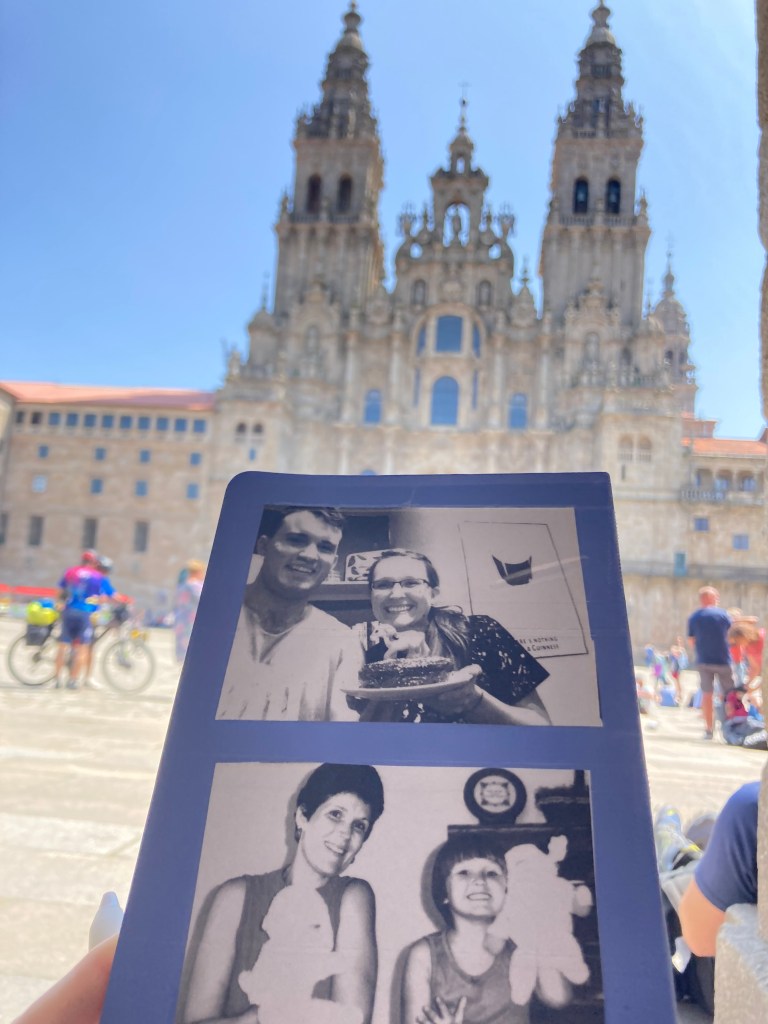
In those four years, Laura’s life has changed. Since grief and organ donation are the bread and butter of Laura’s career, going back to that field after this experience was difficult. “After Kevin died,” Laura shared, “I took a month-long leave of absence. For me, work was going into an OR or having to talk to a grieving family and I was not mentally ready for that. I ended up keeping my family support position for a little under a year and even though I believe it is such beautiful work and I loved being present in those moments, everything was triggering. I think having been trained as a chaplain, I could put my own grief aside and not break down on the job but it was still too close to home for me now. I used to love going in and watching organ recovery in the OR and thought it was the coolest thing—watching a heart on a pump still beating outside the human body—that was fascinating. But after Kevin died, being in an OR for that process felt different and I knew that I wouldn’t be able to do that piece of this job anymore. A leadership position opened up around the same time and I decided to make a change. Organ donation is such important work and I love the mission of LifeSource. Especially now that Kevin is a donor, I wanted to stay involved but I also knew that I needed to support the organization in a different way, at least for now.”
Since 2023, Laura has been a training and education program administrator for LifeSource—a role in which she provides training and onboarding to new hires as well as continuous resources to all LifeSource staff. Though it is a more behind-the-scenes role, Laura enjoys being able to prepare her colleagues to have these important discussions and assist in such a vital process. She brings a new perspective to the role as well, having gained the personal experience of watching a loved one go through the organ donation pathway.
When I asked Laura if she had any last sage words of wisdom on grief, death, or loss that she wanted to impart, she told me this: “Even if you have a lot of experience with grief, new grief is not going to be any easier. Also, I think that when people are supporting others, they want to do or say the right things but reflecting back, what was most meaningful to me were the times people were just there with me. Maybe we didn’t say anything, just sat. Or I think about the times as a chaplain where I was simply present with someone and that’s what made the most impact. We so often get caught up in our own words and sometimes the best thing you can provide someone doesn’t involve words at all.”
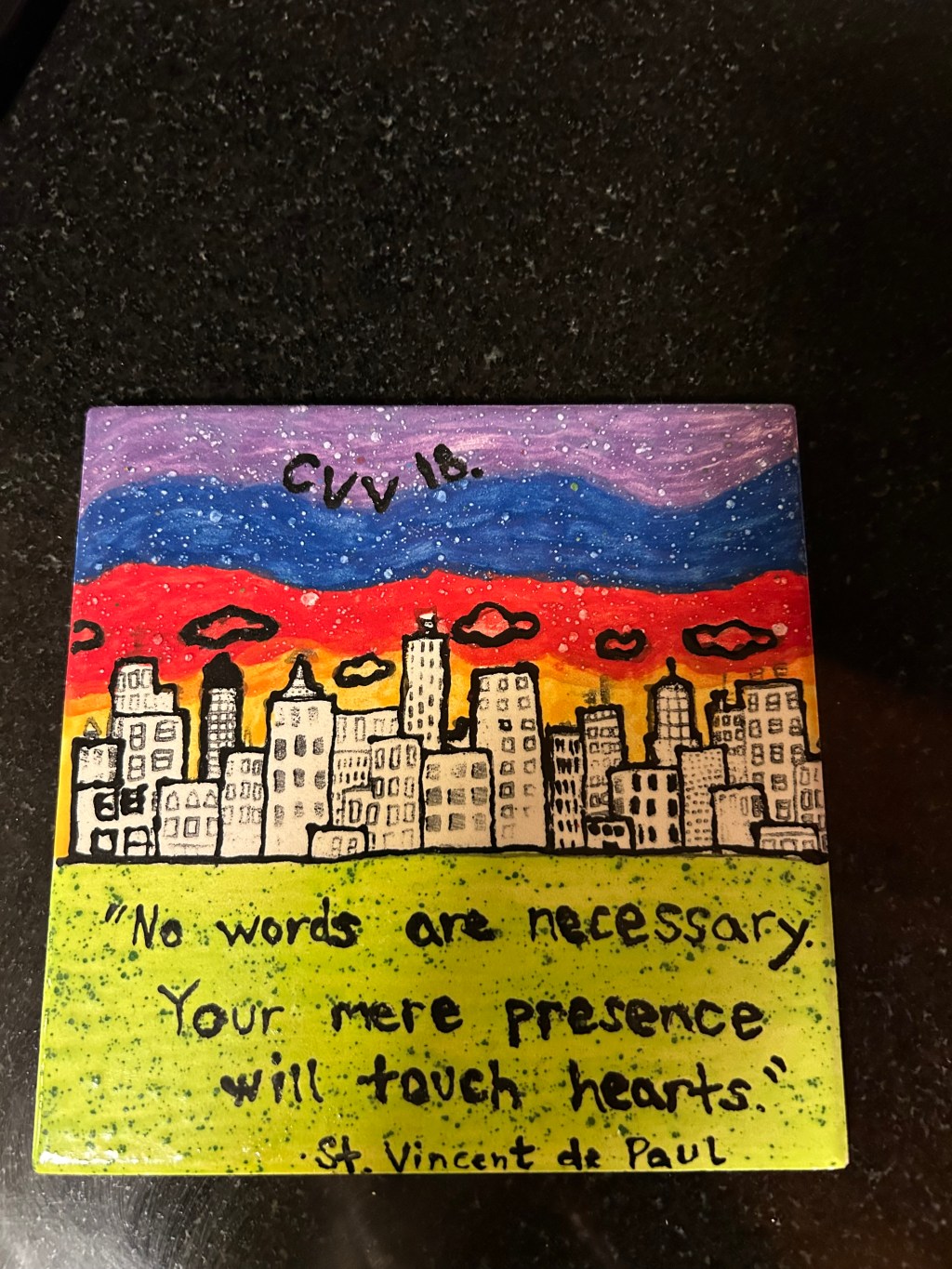
Laura has a trivet in her home (picture featured at the top of this story) that she made near the end of our CVV year at a paint and sip event. It displays one of her favorite quotes from St. Vincent de Paul: “No words are necessary, your mere presence will touch hearts.”
I know that for me, Laura’s presence in my life, as well as in the life and last days of someone I loved, has touched and changed my heart irrevocably. I imagine her sitting next to Kevin in that hospital, holding his hand, listening to Sufjan Stevens or LCD Soundsystem and showing him—through her mere presence—how huge the crater caused by the asteroid of his death would be. And then I imagine them laughing together, maybe with an ice cream cone, and sharing the glorious gift of immutable friendship that, even when it’s over, can fill any hole that the shouts or whispers of grief may attempt to bore.
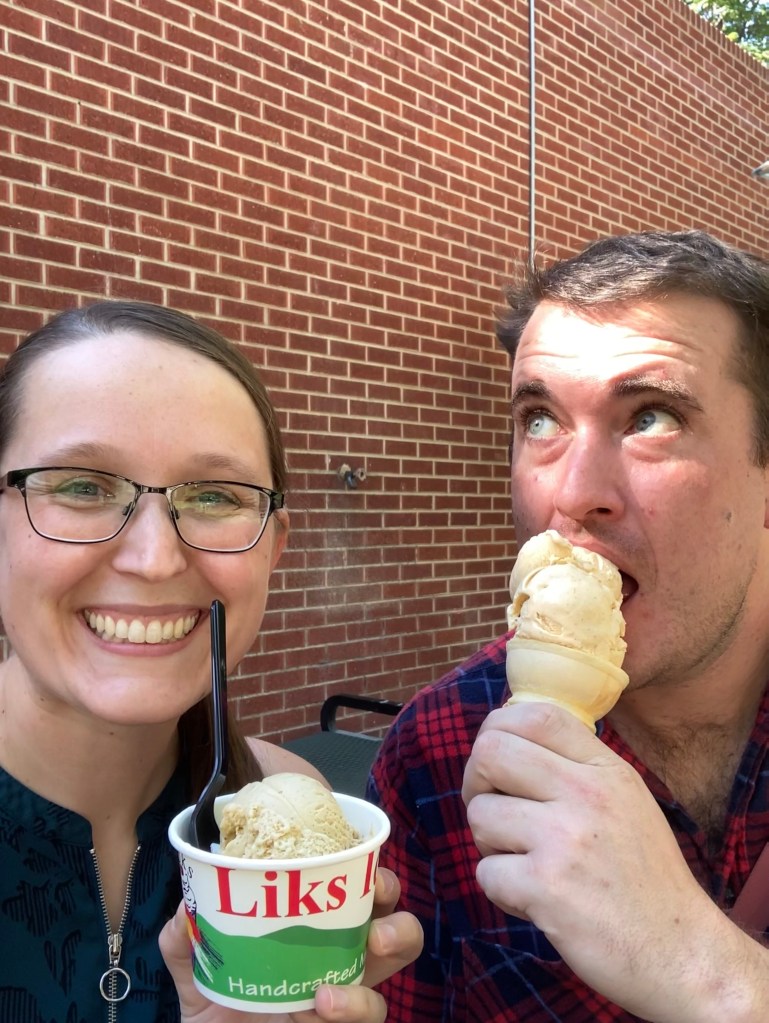
To follow Laura’s adventures with grief, pilgrimage, and ice cream, follow her @pilgrimandthespoon on Instagram
To learn more about the amazing work that LifeSource does, please visit https://www.life-source.org/
To learn more about the Colorado Vincentian Volunteers, please visit https://www.covivo.org/


Leave a comment