Content Warning: This essay and all the following chapters of this essay contain statistics and stories regarding women’s sexual health. If you are wary of or upset by mentions of issues such as infertility, sexual assault, miscarriage, abortion, illness, and sex, please be aware.
Anyone who knows me knows that I read a lot. I am an information hoarder. Though I enjoy listening to podcasts, watching documentary films or series, reading blogs and articles, and engaging in conversations to broaden my perspective, my biggest source of learning comes from books. I actively have two to three books going at any time—typically one fiction and at least one non-fiction, often more than one. I read physical books, listen to audiobooks, and read e-books through my library app on our iPad. I also very much enjoy the hybrid fashion of reading—listening to the audiobook version with a copy of the physical book on hand so I can reference it or sit down and read when I don’t feel like listening. This last method is how I have lately been consuming most of my nonfiction selections, and I find that I get a lot out of approaching it this way.
It will not surprise anyone who finds themselves on this blog dedicated to the fascination with people’s stories that most of the nonfiction selections I enjoy are in some way about people. I read a lot of memoirs and autobiographies, and I enjoy a good biography once in a while. I also really like books about wide-ranging social and cultural issues, and so a lot of the books I select hail from the genres of sociology, psychology, anthropology, history, popular science, etc. The issues I find most fascinating are the ones that impact large groups of people or our society and culture as a whole, especially things that I myself am either impacted by or have the desire to learn more about my role within the systems from which these issues are borne. Some of the topics I find myself coming back to time after time are race and racism; sexism, feminism, and women’s health concerns; American cultural identity and the forces that drive it; the Holocaust, WWII, and formation of Nazi Germany; and books about current issues written from a Catholic social justice perspective. Despite my penchant for certain topics, generally my book selection tends to be pretty wide and undemanding. What I want from a book is that it is engaging and well-written, teaches me something, and unless it is a memoir or autobiography, is well researched and presents a relatively objective point of view.
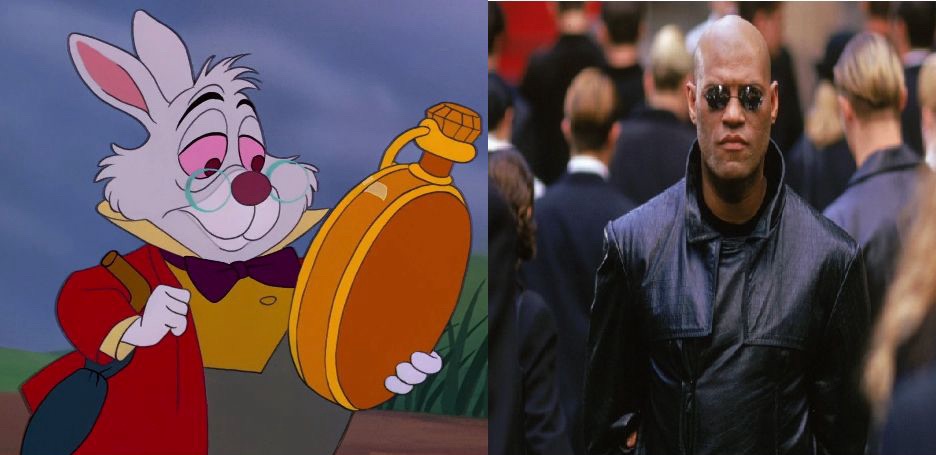
I tend to go down rabbit holes when I read. Thanks to undiagnosed but highly likely adult ADHD, OCD, and a brain that tends to learn three facts and then scream in hysterical fashion I WANT TO KNOW EVERYTHING THERE EVER WAS ABOUT THIS TOPIC EVER until it latches on to the next topic and gets thoroughly sidetracked, I often tend to spiral in a literary fashion. For example, earlier this year I discovered that I love Stephen King and I read three of his novels, including The Stand which is approximately forty thousand pages long, and his memoir all within about a four week period. The next month I read six celebrity memoirs in a row. My curiosity peaked, much like Alice, I pick up book after book on a certain topic or in a niche genre until I tire of the blue pill and return for the red. Is that a mixed metaphor? I mean, The Matrix and Alice in Wonderland are basically the same idea, right? One has a tardy rabbit, one has Laurence Fishburne in sunglasses and leather. Same diff.
I digress.
My most recent rabbit hole has been women’s health and feminist science related. Last month, I read It’s Not Hysteria by Karen Tang, M.D., a thorough and detailed exploration of various women’s health issues written by a gynecological surgeon; and immediately after, I read The Turnaway Study by Diana Greene Foster which is a narrative telling of the eponymous ten-year longitudinal study on the effects of abortion access. This month, I’ve been a little all over the map but have plunged into two excellent books on these same topics: All In Her Head by Elizabeth Comen, M.D., and Eve by Cat Bohannon. The first is a historical look at women’s place in medical history and how it resonates to modern day, written by a seasoned oncologist who specializes in treating breast cancer. The second (which I am actually still reading, a little more than halfway through but already getting SO much out of) is written by an evolutionary science researcher and hones in on how evolution has impacted women’s bodies, healthcare, and the treatment of women throughout the ages.
The above four works are really great examples of what I think constitutes good nonfiction. They all contain a mix of narrative storytelling, solid data, and well-researched facts. While reading and listening to the above titles, I continued to stumble on statistics like…
- 90% of women experience menstrual abnormalities or pelvic problems at some point in their lifetime (Tang)
- 1 in 10 women have endometriosis (Tang)
- Up to 25% of recognized pregnancies end in miscarriage (Tang)
- About 1 in every 4 women will have an abortion in their lifetime (NIH)
- About 45% of women experience sexual violence in their lifetime (CDC)
- Approximately 186 million people globally experience infertility (Tang)
There are many statistics like this. I had heard some of these before as well as other numbers that were just as eye-opening. I have often wondered, upon re-learning or newly discovering data points like these, if the same percentages would hold in my own personal circles? It is gut-wrenching to think that 1 in 5 women I know have been raped or that 1 in 4 of my friends will experience a miscarriage in their lifetime. In addition to the scientific data presented, I have personal experience telling me that these numbers are likely accurate. Still, I have an itchy little brain and always like to investigate (not terribly scientifically, more like a boar hunting for truffles) so I thought—why don’t I muck around a bit and try to find out?

About three weeks ago, I created a Google Forms survey for women regarding various sexual health concerns. I texted it to my friends and family, I posted it on Facebook, and I encouraged friends to share it. My goal was to see, with a much smaller and more intimate data set, whether these numbers would reflect the bigger picture. I had been hoping to get 100 responses and though I only ended up with 63, I still think the results are pretty fascinating.
For myself and for many women, a lot of these issues are deeply personal and may even connect to trauma. What has helped me heal, learn, and grow throughout the years is twofold: seeing the cold hard facts that show me I am not alone or crazy or terminally unique AND hearing personal stories from people who have experienced the same things I have. What I would like to attempt to do in this series of essays, if you’ll allow me, is to share some of the data I have learned from my reading and research and compare it to the results of the survey I conducted, as well as share personal stories where some of these questions and issues have intersected with my own life. My hope is that the methods that have helped me in the past, learning the numbers as well as hearing a real human being’s stories, will be of use to any woman who finds herself reading these essays. I am going to group the questions by topic rather than chronologically and in each section, I will provide both a quasi-scientific reflection as well as an anecdotal one.
Before I do so, I would like to show you the questions as they were laid out on the survey. Multiple choice options to some questions were provided and they are in italics below.
- What is your current age?
- At what age did you get your first period?
- At what age did you lose your virginity?
- About how many sexual partners have you had? None, only one, 2-5, 6-12, 13-20, more than 20, unclear
- What is your current marital status? Single, partnered but unmarried, married, divorced, widowed, other
- Do you have any children? Yes, no
- If yes, how many?
- Are you planning on having any/more children in the future? Yes, no, unclear
- At what age did you give birth to your first child?
- Have you reached menopause or perimenopause? No, perimenopause or pre-menopause, full menopause, unclear
- Have you ever been sexually assaulted or raped? Yes, no, unclear
- Have you ever experienced domestic or partner violence of any kind (physical, verbal, psychological, emotional, financial, sexual)? Yes, no, unclear
- Have you ever experienced any kind of unwanted sexual advances? Yes, no, unclear
- Have you ever experienced sexual harassment? Yes, no, unclear
- If so, where? Friends or family, school, workplace, in public places, medical facilities, on the internet, other
- Have you ever had a miscarriage? Yes, no, unclear
- Have you ever terminated a pregnancy? Yes, no
- Have you ever taken Plan B or the morning after pill? Yes, no
- Have you used any form of birth control during your life? Yes, no
- If so, what forms? Select all that apply. Condoms or diaphragms, birth control pill, IUD, implants or patches, surgical sterilization of self or partner, other
- Have you ever been diagnosed with a chronic or serious illness of any kind? Yes, no
- Have you ever experienced any menstrual abnormalities or been diagnosed with or treated for any gynecological syndromes or diseases? Yes, no, unclear
- If so, about how long did it take to get a diagnosis?
- Have you ever experienced poor or insufficient gynecological or obstetric care from a medical professional? Yes, no, unclear
- Has a gynecological or other women’s health medical professional ever mis-diagnosed you or denied you treatment or a diagnosis? Yes, no, unclear
- Have you ever experienced infertility or been told by a medical professional that you may have infertility issues? Yes, no, unclear
- Have you ever gone through any kind of fertility treatment? Yes, no
- If so, were the treatments successful? Yes, no, unclear
Before I dive into the nitty gritty of the survey results, I would like to make some disclaimers about this “study.”
I am NOT a behavioral scientist or sociologist. I do not even play one on TV. Therefore, the survey I created is hardly scientifically or empirically accurate. It was directly given to people I know and people in my and my friends’ circles. It was not a double blind experiment, though it was anonymous as I did not collect any of the respondents’ identifying information or emails. I did not collect any information on race, ethnicity, sexual orientation or identity, religious affiliation, or socioeconomic status. I imagine, based on who I know I sent it to, that many of the women who took the survey are white, though there are likely at least a handful of responses from people of color. Most of the women polled likely fall somewhere in the socioeconomic middle class, and most of them have at least some higher education. As far as I am aware, they are all U.S. residents. None of this was done purposefully or to exclude any groups; the breakdown is simply the way it is because of who happens to be in my social circles.
So clearly, this “study” is not an inclusive depiction of a wide range of people from different backgrounds. But that was sort of my point. I wanted to see if these facts and statistics held water when only given to people in my own or nearby social circles. Is it really possible that my friends, family members, neighbors, and work associates would reflect some of these heartbreaking statistics? Or is my circle more insulated? Maybe I don’t know handfuls of women who have experienced domestic violence, who have had an abortion, or who have been diagnosed with gynecological diseases. I suspected from the beginning that, though it’s not necessarily something someone wants to admit about the people they know and love, that I did know handfuls of people who had gone through these things. And, I was more or less right.
This is going to be a LONG reflection of this experiment, so I’m going to build on the suspense and break it up into several different posts. Every day or two for the next week or so, I will post a new section. There should be seven sections in all and I promise not to keep you waiting for the next chapter for too long. I know this is a bit different from what I’ve been doing on this blog so far, and don’t worry—more people profiles are coming at you soon! (Very shortly after this little survey project of mine is finished, keep an eye out for the profile of my beautiful friend Maureen and her opera career!) I hope that this aside into a more general kind of people piece helps inform, encourage, and validate women and anyone curious about the far-reaching effects of these issues. Women’s health is much too under-studied, under-researched, and under-discussed. My goal is that in this miniscule way, to whatever audience I may have, I can shed light on some of these topics and provide whoever reads it with even a sliver of solidarity and hope.
Stay tuned!


Leave a comment