
Content Warning: This essay contains statistics and stories regarding women’s sexual health. If you are wary of or upset by mentions of issues such as infertility, sexual assault, miscarriage, abortion, illness, and sex, please be aware.
Before I embark on the next few chapters of this essay, I have a confession to make: I was not sure how to best order the following sections and am still not confident that I formatted it well. Many of these topics feed into one another and it’s sort of hard to feel out a satisfactory flow, so I have attempted to do my best. The grouping of some of the questions was hard as well, but I tried to follow my gut about what I thought should go together.
This section features questions about pregnancy, children, and fertility issues, and though the fertility issues could also go in the chapter about gynecological health and illness, fertility and children are obviously closely linked so I grouped them together. I included the question about menopause with the gynecological symptoms and care section, and I included the question about miscarriage with the section on termination and birth control. Clearly, these two issues are also relative to children and fertility, and my exclusion of those questions in this section does not represent an opinion that they are not relevant factors here; I just liked how they went with the other sections better. I may have some other reasons as to why I included them where I did, which I will explain further once we get there. Again, as with much of the data and reflections on these survey questions, there is no real scientific basis: I just did what I thought made sense. So, please forgive me if the way that I chose to group certain topics is not what you expected. I promise I have at least some method to my overall madness. (Emphasis on some.)
Do you have any children? Yes, no
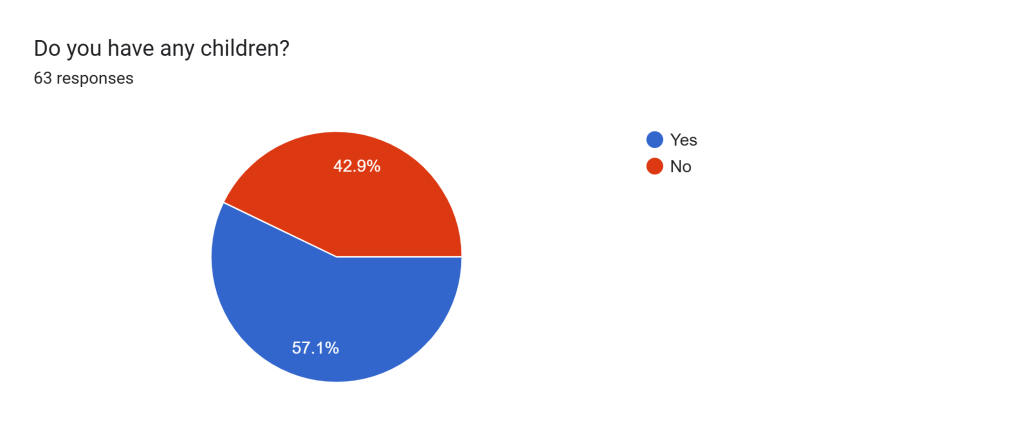
More than half of the women who took my survey have children: 36 responded yes, and 27 responded no.
According to a CDC report from 2023, the number of registered births in the United States was 3,596,017, with the birth rate being 10.7 per every 1,000. The fertility rates have dropped with 54.5 births per 1,000 women ages 15-44.
I found the below chart, also from the CDC, documenting birth rates from 1990 to 2009 very interesting, though a little out of date. Combining the above data and this chart, I would imagine that the bars representing the years from 2010-2026 would reflect similar patterns.
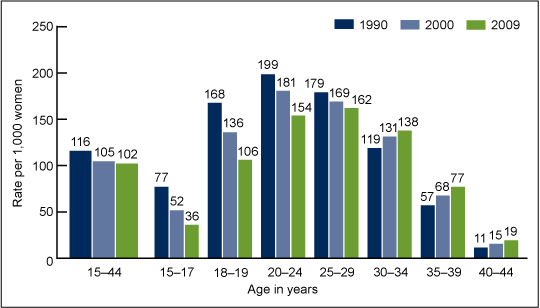
What I found most interesting about the above graph is that in all the age brackets for women at ages generally considered to be most fertile, the numbers have declined since 1990, and continue to; additionally, the numbers in the 30-34, 35-39, and 40-44 ranges have increased between 1990 and 2009.
This data speaks to my experience for sure. Many of my friends are having their first children in their mid to later 30s. I think it is much more common in recent times for women to remain childless throughout their twenties and early thirties. Marriage seems to be a more deliberate decision, and many women use the bulk of their young adulthood to focus on gaining higher education, building their careers, and taking the time to find someone they want to spend the rest of their life with, if that is a priority for them at all. Though giving birth at age 35 or higher is still medically considered a “geriatric pregnancy,” you will find many women who are just beginning to build their families at or after that age.
If yes, how many?
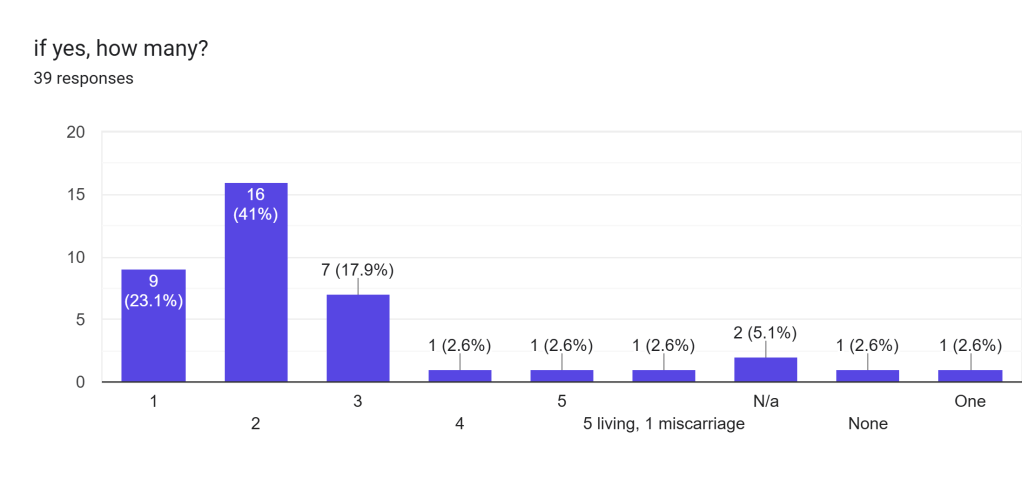
Though the above graph is relatively straight forward, a few respondents either did not respond numerically or they added other details to their response. Here is the breakdown after taking all answers into account. From the 36 women who replied that they do have children: 16 women answered that they have 2 children; 10 answered 1 child; 7 answered 3 children; 2 answered 5 children; and 1 answered 4 children.
According to 2022 data gathered by the U.S. Census Bureau, the average size of the American household is three people. It does not specify whether that reflects two parents and one child or one parent and two children. According to the below graph from the Population Education website, the number of children per family has continued to drastically decline over the last 220 years, except during the late 1950s–1960s, otherwise known as the “baby boom.”
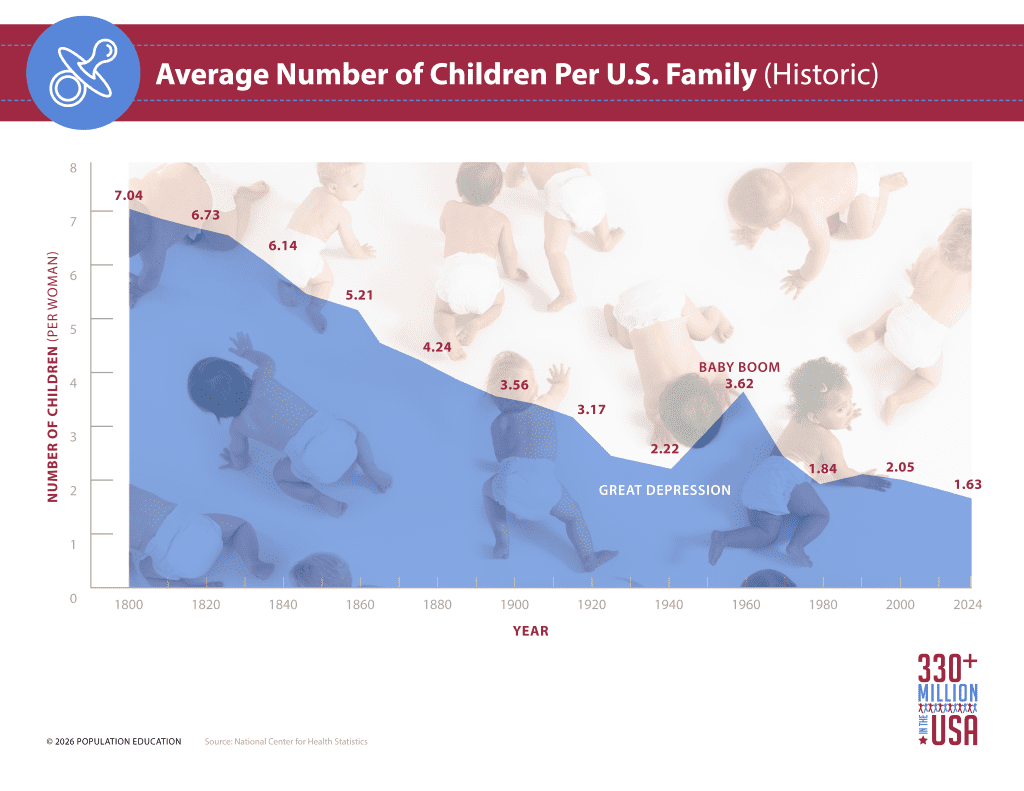
The babies in the background of that graph are crawling away as fast as they can to avoid population decline! (Those little diapered butts are pretty cute though, huh?)
Are you planning on having any/more children in the future? Yes, no, unclear
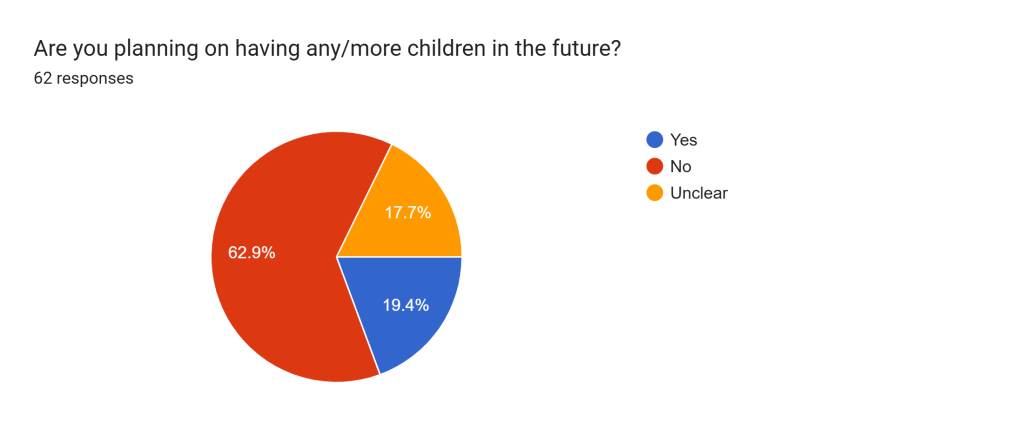
On the question of whether they were planning on having more children: 39 women answered no, 12 answered yes, and 11 answered unclear.
I went down a mini rabbit hole with this question because my curiosity was peaked. (When is it not?) I wanted to see how the 27 women who responded that they did not have any children answered this question. What I found was that 11 of the childless women replied no they were not planning on having future children, 8 replied yes, and 8 replied unclear.
I then securely fastened the straps of my invisible geek helmet and made a chart complete with highlighted sections in my notebook. *pushes glasses up bridge of nose while breathing heavily* I made columns on the age of these women, relationship status, whether or not they reported being in menopause, and whether or not they had experienced chronic illness, gynecological issues, or infertility.
Of the 11 childless women who replied no to this question, five of them were in their 60s or 70s and had entered menopause. One other woman, a 37-year-old, replied that she was in peri-menopause, which is early but certainly not unheard of. One can get pregnant during peri-menopause but this woman responded that she did not have plans to.
The other five women who replied no had varied profiles. Four of them were in their 30s and one in her 40s. Four of these women responded that they had experienced chronic health, gynecological issues, or infertility. Of these four, three were married and one was single. The last woman was single, 36, and did not respond that she had had any such health issues so one could assume that this woman simply does not want children.
WHAT!? A WOMAN WHO DOESN’T WANT CHILDREN!? You mean, there are women out there who don’t experience early menopause, gynecological disease, chronic illnesses, infertility, etc, that just don’t have children? What’s wrong with them!?
Well, you already know. NOTHING. There is nothing wrong with them whatsoever. In fact, I happen to know whose data this is (yes, again, the survey was anonymous but there were a couple respondents whose identities I could discern based on specific answers; family and best friends can usually sniff each other out, ya know) and I can attest that she does not and has never wanted kids. I once watched her look at a baby’s head and mutter to herself, “you could just smush it so easily, couldn’t you?” I promptly removed the baby from her arm’s reach. In all seriousness, though she is most certainly not a baby-smusher, for as long as I have known her (which is a long time) she has never dreamed of a future that involves kids. She is a hard worker dedicated to her career, loves to travel, go to concerts, acquire body art, and pamper her dog. And all that works beautifully for her. As someone who loves her immensely, I am so happy that she has found a lifestyle that fits and fulfills her.
We’ve come pretty far from the societal notion that women have to be mothers but I still think childless women and couples are sometimes seen as less than, or unusual. I think that a lot of people, especially other women, think it bizarre when a woman has no desire to become a parent. We even give them excuses, as I was sort of looking for when I pried deeper into the childless women statistics. It makes sense that women who are experiencing infertility or other health issues may decide that they will not pursue having children. But a perfectly healthy young woman who says she is never going to have kids may be thought to be selfish or that she “just doesn’t have that maternal instinct.”
Let me tell you something: I don’t think there is such a thing as a maternal instinct. All women are born with more or less the same parts and systems. Some systems can be dysfunctional and environment and experience certainly play a role in whether or not a woman decides she wants to be a mom. But, I personally do not believe that some women are born to be mothers while others are not. You know what makes you a mom? Having a kid. Being a good mom is a whole other story and there are plenty of women who choose to have children that do not fit that bill. There are also plenty of women, my friend included, that should they happen into motherhood, would likely turn their lives upside down to be the best mother they could possibly be. But all women, and people, have different likes, needs, wants, and priorities and it is okay if being a parent isn’t on your list at all. I don’t think it has anything to do with having or not having some intrinsic instinct. It just has to do with choice.

Let me get back to the other numbers I found when I did my digging on this question.
Eight childless women responded that they were unclear about whether or not they were going to have children in the future. Seven of these eight women were in their 30s, and one was 29. Five of these women were single, two were married, and one was partnered but unmarried. Three of these women reported no history of illness or infertility and five reported either illness, gynecological disorder, or infertility.
Eight childless women responded yes that they were planning on having children in the future. One of these women actually replied that she was currently pregnant, so her plan is pretty solid! (I don’t know who this was but if you’re reading this: congratulations, mama!) Three of these women were in their 20s, five were in their 30s. Four were single, two were married, and two were partnered but unmarried. Three of these women reported a history of illness or infertility, whereas the remaining five reported having no history.
I think the data from the childless women who were unclear as well as those who were clear about wanting future children speaks to the idea of hope and/or the notion of keeping one’s options open. What surprised me the most in both sets was the fact that a large number of these women (five unclear, four yes) reported being single. I think that shows a lot of promise that women who may not even be in a committed relationship are still planning on, or at least unsure about and potentially open to, having children. You don’t necessarily need a partner to have a baby or be a mom, but unless you’re planning on adopting, you do need sperm. Maybe these women are planning on going into motherhood alone via a sperm donor or adoption, or maybe these women are hopeful that someday they will meet a person they want to procreate with. Either way, I think these single ladies’ answers show a lot of commitment and possibility which I find very hopeful.
Let me touch on the unclear answers for a second before we get to the next question.
I was among the eight women who responded unclear. For me, my lack of clarity has to do with health concerns and my age. I have multiple chronic illnesses, one of which is a gynecological disease, and I am almost 37. My mother was menopausal at 38 so I can hear the dooming dings and dongs of my fertility clock getting louder with every passing day. Premature menopause is hereditary, but that doesn’t mean I am guaranteed to be menopausal in the next few years; it’s just a little more likely.
My husband and I want kids. We always have. But since the progression of my illnesses, the possibility that we will actually be able to have them naturally has become more and more slim. Whether or not my body is able to carry a pregnancy to term, which frankly it simply may not be able to do, there are days when I don’t have the energy or ability to properly care for myself so I’m sometimes unsure about what kind of mother I would be in this state. We intend to try and are definitely open to the idea of adoption if we can’t conceive naturally, but there are a lot of factors beyond conception at play. I have faith that if we are meant to be parents, we will be. But I remain unsure. Only time will tell, que sera sera, and all that.
I imagine, chronically ill or not, many women feel the same uncertainty about parenthood that I do. It’s a huge, life-long commitment, and though the benefits and gifts of parenthood are a thousand-fold, the sacrifices one needs to make to be a suitable one are countless. I am confident that I am not the only woman who both yearns to cradle her own baby in her arms and has doubts or worries about what that might mean for her life.
At what age did you give birth to your first child?
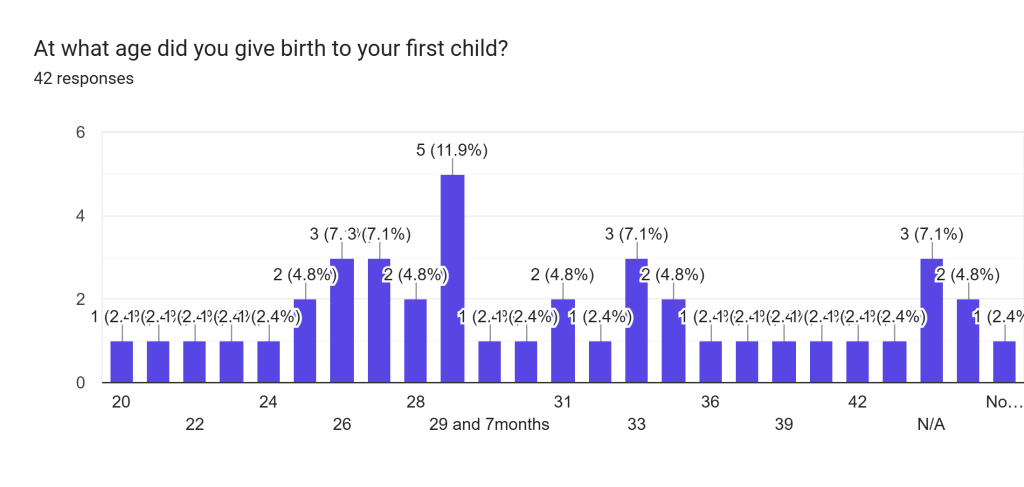
Again, this graph is a little confusing because of how some respondents answered. Here are the stats: 6 women replied they were 29 when they had their first child; 3 women responded age 26; 3 women responded age 27; 3 women responded age 33; 2 women responded age 25; 2 women responded age 28; 2 women responded age 31; 2 women responded age 34; 2 women responded age 36; 1 woman responded age 20; 1 woman responded age 21; 1 woman responded age 22; 1 woman responded age 23; 1 woman responded age 24; 1 woman responded age 30; 1 woman responded age 37; 1 woman responded age 39; 1 woman responded age 40; and 1 woman responded age 42. One woman has an adopted child so though she is counted as part of the 36 women who reported having children, because she does not have any biological children, she is excluded from this count.
The ages reported on the survey definitely align pretty closely to national standards, some of which I featured in the beginning of this essay. According to data collected by the CDC in 2023:
- From 2016 to 2023, the percentage of first births to mothers under 25 dropped, with a 26% decrease for those under 20 and a 9% decline for those aged 20 to 24.
- Meanwhile, the percentage of births to mothers aged 25 to 29 remained steady at 28.5%.
- In contrast, first births for older mothers increased, with a 12.6% rise for those aged 30 to 34 and a 25% increase for mothers aged 35 and older. (CDC National Center for Health Statistics, 2025)
My survey results reflect the general national mean, with age 29 being the mean result. Again, as I touched on in the beginning of this essay, this data speaks to my own lived experience of knowing many women who do not embark on pregnancy and motherhood until sometime between their later 20s and mid 30s.
Have you ever experienced infertility or been told by a medical professional that you may have infertility issues? Yes, no, unclear
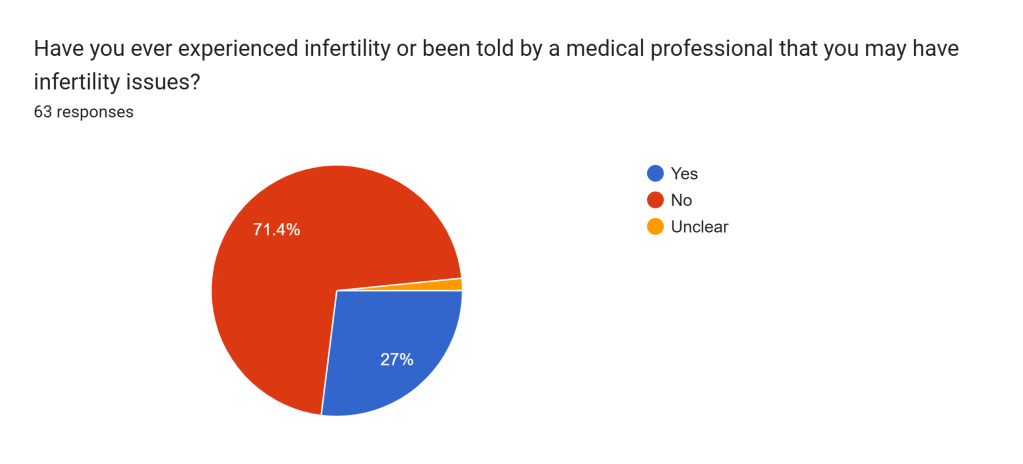
As you can see from the pie chart, the majority of women who took this survey reported not having any known or suspected fertility issues. 45 women reported no; 17 women reported yes; and 1 woman reported unclear.
According to Karen Tang, M.D. in her book It’s Not Hysteria, “The WHO estimated that 48 million couples and up to 186 people globally live with infertility. Despite these staggering numbers, people struggling to get pregnant often feel alone, because the process of trying to conceive is such a private and personal experience…Having difficulty becoming or staying pregnant can involve a heartbreaking combination of medical challenges and emotional, financial, and interpersonal stressors. It may feel confusing and frustrating, and it’s compounded by the fact that in up to a third of cases, testing doesn’t reveal a clear answer as to the root cause.”
Tang goes on to define infertility as the inability “to become pregnant after one year of trying regularly.” Infertility can even occur after the birth of one or multiple children, a condition Tang refers to as “secondary infertility.” Her book has an entire chapter about infertility and though I will not go into all the information she provides, she covers a variety of potential factors that could cause infertility such as ovarian, tubal, uterine, and male factors. She emphasizes one point though, which I think deserves to be quoted here: “In almost all circumstances, the causes of infertility are biological conditions outside of people’s control, not something that they did wrong.”
I was among the 17 women who answered yes to this question. Though my husband and I have not sincerely tried for a whole year to determine whether or not we can conceive naturally, I have been told by multiple medical professionals that fertility may be an issue given my variety of health problems, one of which directly affects my reproductive system. As I mentioned before, we do want children and we plan on trying to conceive naturally, but we understand the risks and the likelihood that it may not work. We plan to consult a high risk fetal medicine doctor and a fertility specialist to explore the safest, smartest ways to achieve our ultimate goal of parenthood. There are so many options out there for women who want to bring children into the world but who may have roadblocks carrying pregnancies to term, and many, like myself, are aware of potential problems before they even start trying. We’re not there yet; but we’re grateful to know we have choices.
Have you ever gone through any kind of fertility treatment? Yes, no
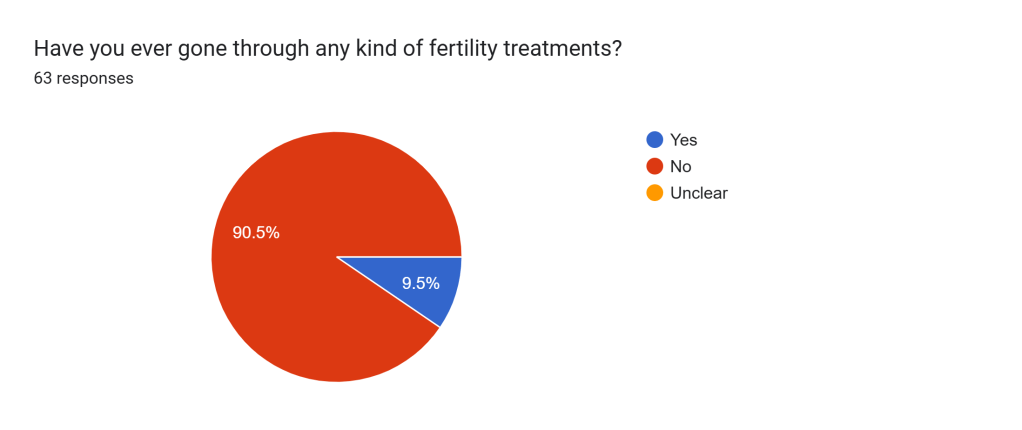
Most of the women who responded to my survey answered no to this question: 57 said no, 6 said yes. Let’s look at the next chart before getting into some more information on fertility treatments.
If so, were the treatments successful? Yes, no, unclear
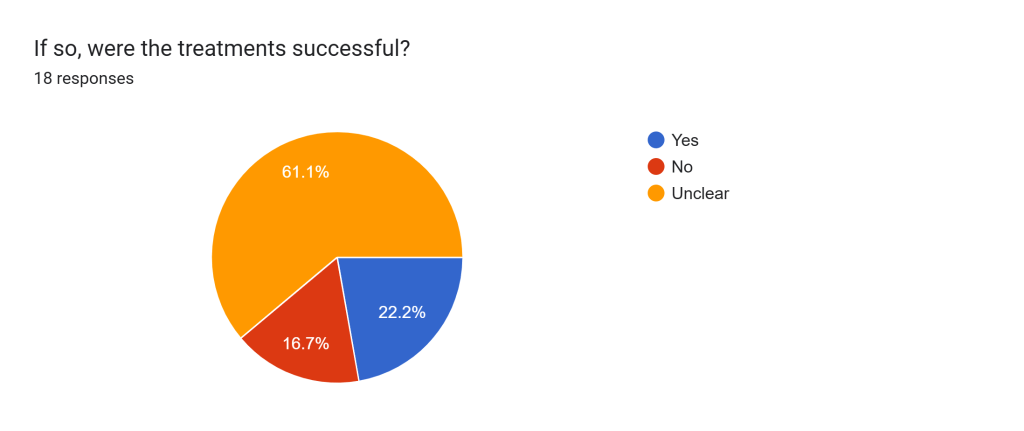
The data from this question as presented on the pie chart is inaccurate because some women who answered that they had not had any fertility treatments answered no or unclear to this question even though it didn’t apply to them. After breaking down the numbers and finding that 45 women left this blank; 11 responded unclear; 4 responded yes; and 3 responded no, I went back into the individual surveys of the 6 women who replied that they had undergone fertility treatments and tracked their responses: 4 reported that yes they were successful and 2 reported no they were not.
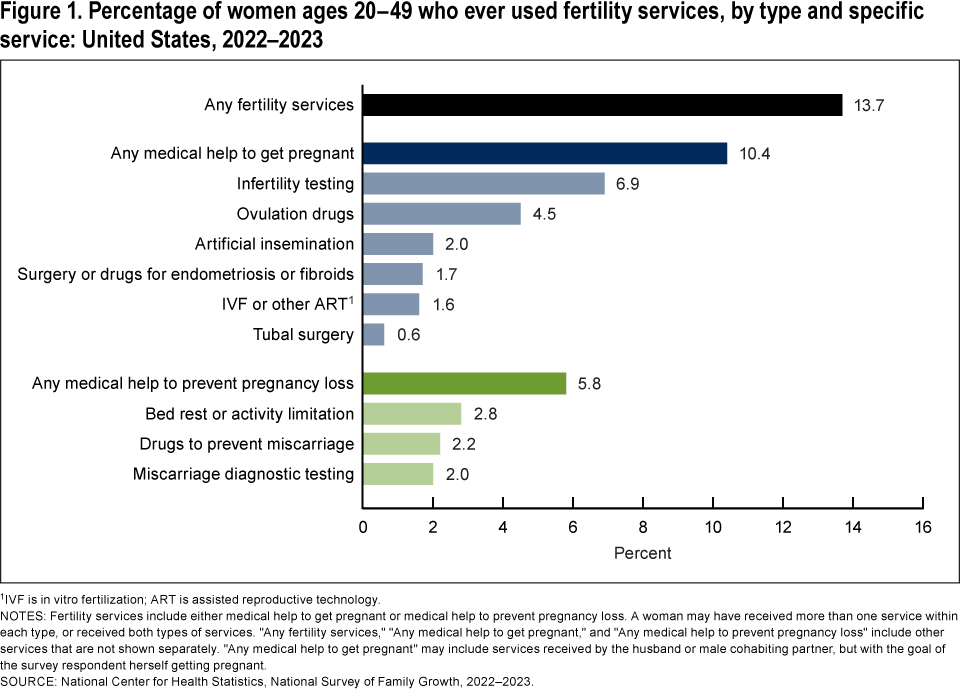
According to CDC data collected in 2022-2023, “among women ages 20–49 in 2022–2023, 13.7% had ever used any fertility services; any medical help to get pregnant was used by 10.4% of women ages 20–49; among types of medical help to get pregnant, 6.9% of women ages 20–49 had infertility testing on themselves or their partner, 4.5% used ovulation drugs, 2.0% had artificial insemination, 1.7% used surgery or drugs for endometriosis or fibroids, 1.6% used in vitro fertilization (IVF) or other assisted reproductive technology procedures, and 0.6% had tubal surgery.” There is a handy little graph below that represents these findings.
Hmm. Okay, well looking at the amount of women who receive fertility treatments and then glancing back at the staggering numbers presented above about the some 186 million people globally who experience infertility…where is the disconnect? If so many people are suffering from this, shouldn’t there be a whole lot more people seeking treatment for it?
As I quoted Tang saying above, conception is certainly a private and sensitive matter which might account for some of the people who do not seek medical help to achieve pregnancy. But, I think there are two much bigger factors at play: money and healthcare.
Everyone knows that having babies and raising children are expensive pursuits. But truly, having your own child naturally is probably the cheapest way to get a baby.
According to a blog posted on Carrot’s site (Carrot is a fertility options organization) in April 2026, the national average for one IVF cycle in 2026 is about $23,474. Carrot also provides the following caveats: most people need more than one cycle for success, medications and genetic testing can drive up the costs, and though most employer insurances cover some treatment costs, many costs are not fully covered.
Ok, well that’s expensive. What about something else? How about surrogacy?
According to Illume Fertility, gestation surrogacy services in the United States typically cost anywhere between $100,000 to $250,000. Budgeting about $60,000 to $110,000+ for surrogate compensation and allowances; $30,000 to $70,000 for IVF and medical care; $30,000 to $60,000 for agency fees; $15,000 to $30,000 for insurance costs; and $5,000 to $15,000 for legal fees.
Welp. That’s even more expensive. Let’s look at adoption.
Though adopting children through the foster care system in America is relatively inexpensive, those who wish to adopt a newborn straight from birth by going through a private adoption agency or an international service can run into costs ranging from $40,000 to $85,000 (according to the organization Adopt US Kids.) Adopting children through the foster care system is a noble pursuit and though its costs are far less egregious (Adopt US Kids ballparks it at somewhere around $3,000) there are many issues that children adopted through the foster system and foster-to-adopt parents have to confront that make this option a less than ideal one for many people hoping to bring a baby home.
The easiest and most inexpensive way to have a baby is to make one yourself without any intervention. That is, outside of medical appointments, tests, prenatal vitamins, pregnancy classes, hospital stays, etc that “normal” pregnancy brings. You just have to use some voodoo magic to ensure that you have a totally ordinary, complication-free, healthy pregnancy that you carry to term. Or, be very lucky.
Listen, we have two cats and they’re already making us poor. Who knows the costs we will have to endure if we can’t conceive naturally. It would be unlikely that we, who are relatively comfortable but not as comfortable as we could be, would be likely to afford any of the above solutions. Maybe pet parenthood is the way to go.
It begs the question though, why are fertility treatments and solutions so damn expensive? Shouldn’t accessible, affordable healthcare include reasonably priced options at preventing pregnancy as well as reasonably priced options for maintaining one? In a nation that is so hellbent on insisting women carry pregnancies to term, you’d think our government would offer families seeking assistance to create new life a helping hand. Right? Right???
Below is a handy little graph, also from the CDC, on income and fertility services. Turns out the highest percentage of people receiving fertility services are living at 450% beyond the federal poverty level. This percentage reflects an annual income of $97,380 or more for a two person household or $150,000 for a four person household. This is certainly doable for many people and according to the most recent U.S. census, accounts for about 43% of the population.
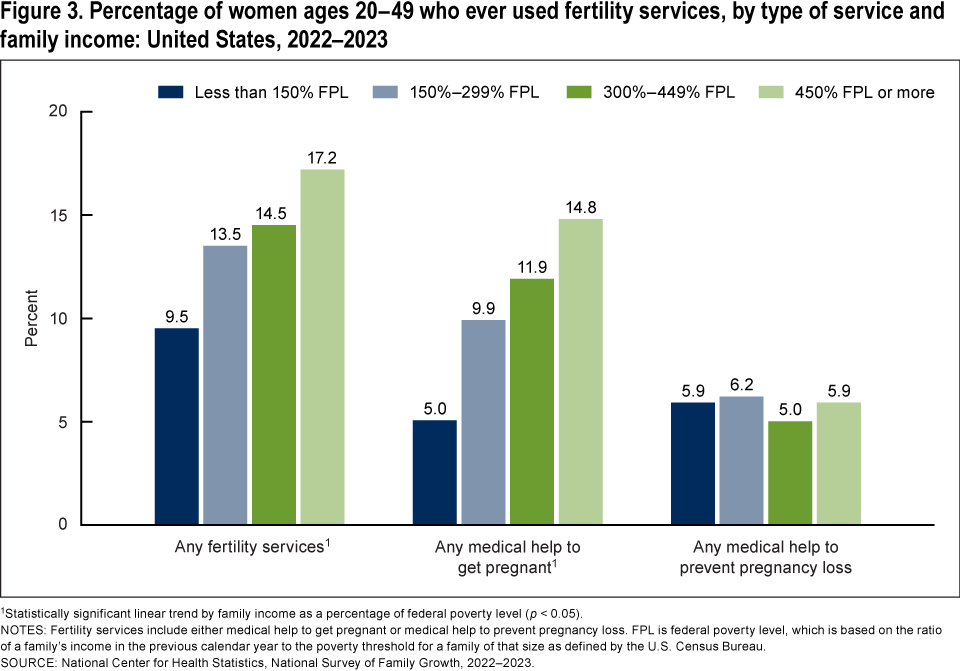
But if you take into account the costs I provided above for fertility services, surrogacy options, or private adoption, it becomes a starker picture. Could a couple living on $97,380 a year afford to raise a child? Almost certainly, and depending on location, health insurance coverage, the accessibility of public schools, etc—they could probably do so relatively comfortably. Could a couple living on $97,380 a year afford two $20,000 plus IVF rounds or a $60,000 adoption? That is much more unlikely. And you can totally forget surrogacy—that steps into territory no one in this bracket could afford.
Now think about the 35.9 million people living at or below the poverty level (USCB.) As we well know, many of these people struggle to care for themselves or the children they have naturally. So what if they are infertile?
I guess they just don’t have children.
What a heartbreaking blow to a woman who just wants to be a mom or a couple who tries their best to get by and desires to bring a baby into their life anyway, only to find out biology is against them and no affordable options to address this heartbreak exist for them.
I guess there’s just nothing that can be done for such people.
But. What if there were? What if fertility treatments were actually life and family affirming and equitably accessible? The government prohibiting women from having abortions does nothing if when a woman comes to her healthcare system for help in bringing about new life, she is turned away because all the solutions she is presented with are preposterously priced and not covered sufficiently by her healthcare plan. Why don’t we make that a focus? Focus on helping where it is actually needed instead of just dictating what women should do with their bodies. Focus on helping build healthy families for people who want to have children but don’t have the resources, instead of forcing women to carry unwanted pregnancies. Now, that would be a real pro-life movement, wouldn’t it? Practicing what you preach, what a concept.
Though I do believe there is a right answer to the above questions, there is no easy answer; I certainly don’t have a plan to figure it all out. But, I do know that we need to do better for women and families around the world and right here in the grand old US of A.

Resources to Check Out:
CDC article on dropping pregnancy rates: https://www.cdc.gov/nchs/products/databriefs/db136.htm
National Health Statistics Report article on pregnancy and childbearing trends: https://www.cdc.gov/nchs/data/nhsr/nhsr092.pdf
National Health Statistics Report article on infertility: https://www.cdc.gov/nchs/data/nhsr/nhsr202.pdf
National Center for Health Statistics report on fertility services: https://www.cdc.gov/nchs/data/databriefs/db542.pdf
NBC News Report on family size: https://www.nbcnews.com/health/parenting/how-modern-us-family-size-changing-charts-map-rcna65421
CDC blog on the rising age of motherhood: https://blogs.cdc.gov/nchs/2025/06/13/7780/
Adopt US Kids website:https://adoptuskids.org/?r=l
Carrot Fertility Services website: https://www.get-carrot.com/


Leave a comment